
Few issues generate stronger reactions in American politics than immigration.
When combined with questions about citizenship, national identity, and elected officials, the result is often a political controversy that dominates headlines for days or even weeks.
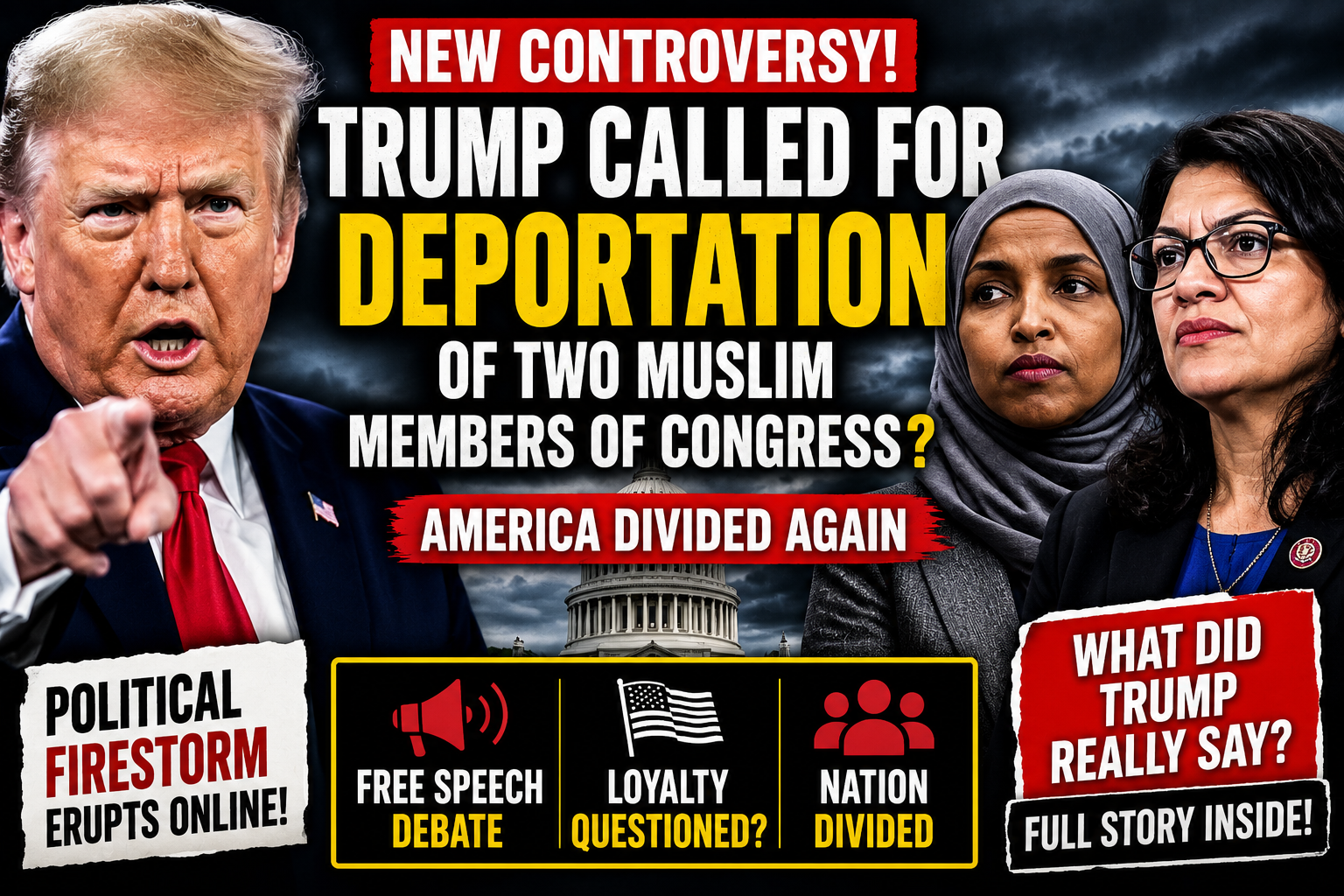
That is exactly what happened when claims resurfaced online suggesting that President Donald Trump called for the deportation of two Muslim members of Congress during a heated political dispute.
The controversy quickly spread across social media, news outlets, and political commentary programs, reigniting debates about immigration, free speech, patriotism, and the treatment of political opponents.
Supporters and critics offered dramatically different interpretations of what was said, what was intended, and what the comments reveal about the state of American politics.
Years after the original controversy first emerged, the debate continues to serve as a powerful example of how political statements can shape national conversations and deepen existing divisions.
How the Controversy Began
The dispute traces back to a series of public disagreements involving President Trump and several Democratic lawmakers who were among his most vocal critics.
At the center of the controversy were members of Congress who frequently challenged Trump’s policies on immigration, foreign affairs, healthcare, and civil rights.
As political tensions escalated, comments made during public exchanges quickly became major national news stories.
Critics argued that certain remarks appeared to question whether elected representatives belonged in the United States or should remain involved in American politics.
Supporters of Trump argued that the comments were directed at political viewpoints rather than citizenship status.
The disagreement over interpretation became a story in itself.
Immigration and Political Identity
Immigration has long been one of the most controversial issues in American politics.
Debates surrounding border security, citizenship, refugee programs, asylum policies, and legal immigration often produce strong emotions across the political spectrum.
During Trump’s political career, immigration became one of his signature issues.
Supporters praised his emphasis on border enforcement and national sovereignty.
Critics argued that some rhetoric surrounding immigration risked alienating immigrant communities and increasing political polarization.
Because of that broader context, comments involving elected officials and questions about national belonging attracted immediate attention.
The Role of Congress
The controversy also highlighted questions about the role of elected representatives in a democratic society.
Members of Congress routinely criticize presidents and government policies.
That criticism is often sharp, public, and highly visible.
Supporters of the lawmakers involved argued that questioning government decisions is a fundamental part of representative democracy.
From their perspective, elected officials should be free to challenge policies without having their loyalty or place in the country questioned.
Others argued that public officials should also expect criticism when they make controversial statements about America or government institutions.
The disagreement reflects broader debates about patriotism, dissent, and political accountability.
Supporters and Critics See Different Stories
One reason the controversy remained in public discussion is that different groups interpreted the events in completely different ways.
Trump supporters generally argued that his comments focused on political disagreements rather than immigration status.
They viewed the controversy as another example of media outlets and political opponents interpreting statements in the harshest possible way.
Critics disagreed.
Many argued that references to leaving the country or questioning whether individuals belong in America carry significant historical and political implications.
From their perspective, the comments crossed a line that should not be crossed in democratic debate.
Those competing interpretations helped fuel years of ongoing discussion.
Social Media Amplifies the Conflict
Like many modern political controversies, social media played a major role in spreading the story.
Clips, quotes, screenshots, and commentary circulated rapidly.
Supporters and critics shared different versions of events.
Political influencers, journalists, activists, and elected officials all joined the conversation.
As often happens online, the debate expanded beyond the original comments.
People began discussing broader questions involving race, religion, citizenship, immigration, and freedom of expression.
The result was a controversy that grew far larger than the initial statements themselves.
The Question of Free Speech
Another major issue raised by the controversy involves free speech.
Political leaders frequently criticize one another.
In a democratic system, disagreement is expected.
The challenge comes when criticism touches on sensitive topics involving identity, nationality, or belonging.
Supporters of strong political speech argue that public figures should be able to engage in vigorous debate without fear of censorship.
Others believe leaders have a responsibility to choose their words carefully, particularly when discussing issues that affect minority communities.
The controversy highlighted the ongoing tension between those two viewpoints.
Why the Story Still Matters
Years later, the dispute continues to be referenced because it touches several issues that remain central to American politics.
Immigration remains a major election issue.
Questions about citizenship and national identity continue shaping political campaigns.
Political polarization remains high.
And social media continues amplifying controversial statements faster than ever before.
As a result, controversies involving these topics rarely disappear completely.
Instead, they often return whenever similar debates emerge.
The Broader Political Climate
The controversy also reflects the larger reality of modern American politics.
Many voters increasingly view political events through partisan lenses.
Supporters and critics often consume different news sources, follow different commentators, and interpret events differently.
That environment makes consensus difficult.
The same statement can be viewed as reasonable criticism by one group and deeply offensive by another.
This divide helps explain why political controversies frequently generate such intense reactions.
Looking Ahead
As future election cycles approach, immigration and national identity are likely to remain major political topics.
Candidates from both parties continue debating border security, immigration reform, citizenship policies, and the role of government.
Because those issues are deeply connected to personal identity and national values, disagreements are unlikely to disappear anytime soon.
Political leaders will continue facing scrutiny over how they discuss these topics.
Voters will continue deciding which arguments they find most persuasive.
Final Thoughts
The controversy surrounding claims about deportation and members of Congress demonstrates how quickly political disputes can evolve into major national debates.
Supporters view the dispute as an example of political rhetoric being taken out of context.
Critics see it as evidence of deeper concerns about how political leaders discuss immigration and national identity.
Regardless of where people stand, the debate highlights the power of public statements in shaping political conversations.
In today’s media environment, a single comment can generate weeks of headlines, millions of social media interactions, and lasting political consequences.
That reality ensures that controversies like this one continue influencing American politics long after the original headlines fade.