
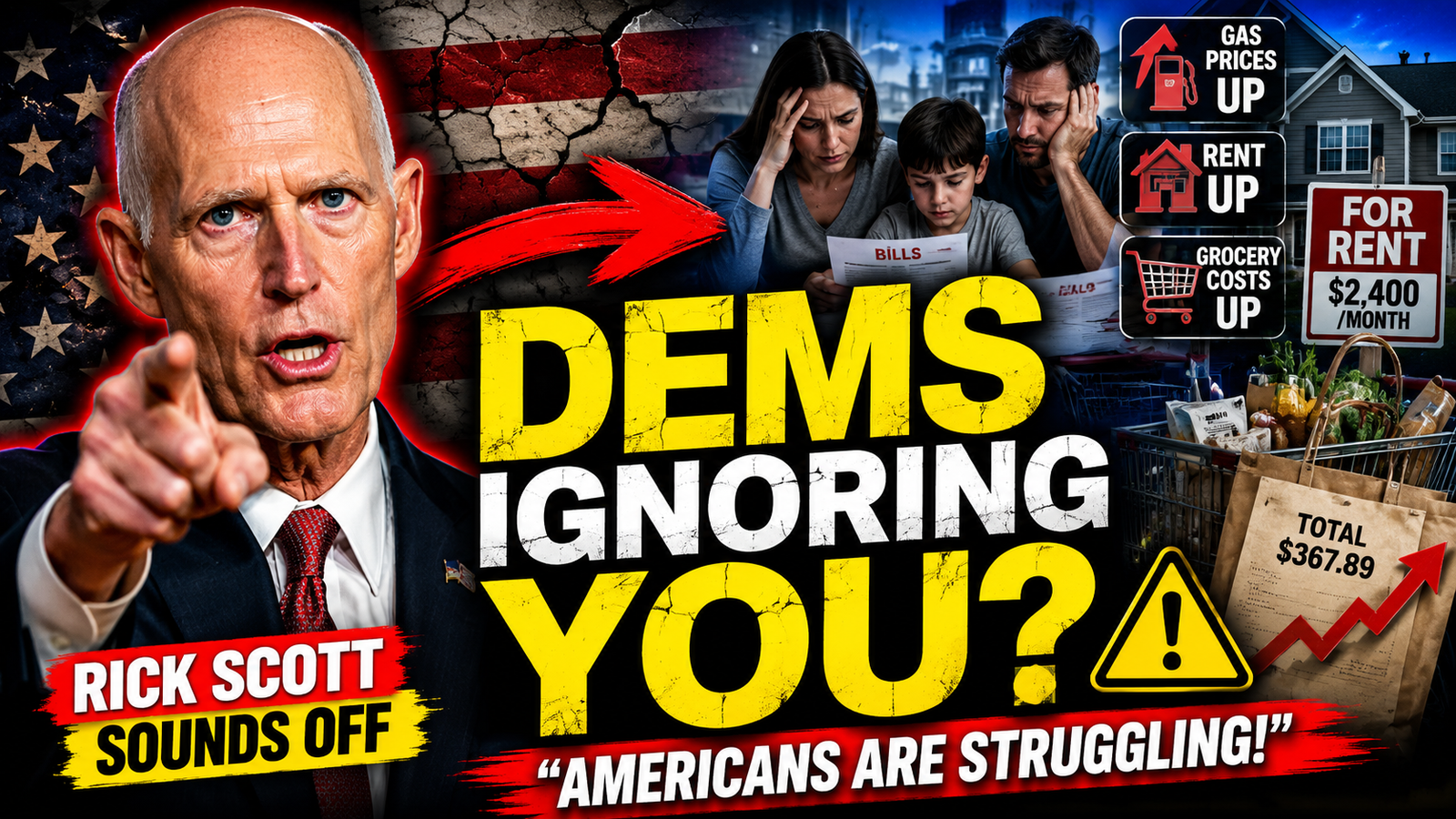
Senator Rick Scott has intensified his criticism of Democrats, arguing that their priorities are increasingly disconnected from the concerns of ordinary Americans.
In a recent political statement, Scott framed the debate around core economic and social issues such as housing affordability, cost of living, and public safety, while accusing Democrats of focusing on issues he claims do not reflect the immediate needs of most citizens.
The remarks come amid a highly polarized political climate where immigration, inflation, and public safety continue to dominate national discourse.
Scott’s Core Argument
Scott’s criticism centers on the idea that many Americans are struggling with basic economic pressures while Washington remains focused on broader ideological debates.
He argues that “normal people,” as he described them, are primarily concerned with:
- Affordable housing
- Lower cost of living
- Safe neighborhoods
- Economic stability for families
According to Scott, these priorities are not being adequately addressed, and instead, Democrats are focusing on immigration-related policy issues that he claims do not align with everyday voter concerns.
Political Framing and Messaging Strategy
Scott’s comments reflect a broader Republican messaging strategy that emphasizes economic frustration and public safety concerns as central campaign themes.
By highlighting affordability and safety, Republicans aim to:
- Appeal to working-class voters
- Focus attention on inflation and housing costs
- Criticize federal immigration policies
- Position themselves as more aligned with “everyday Americans”
Scott’s framing is part of a recurring political narrative that contrasts “elite Washington priorities” with “real-world concerns” faced by families across the country.
Immigration as a Central Flashpoint
Immigration remains one of the most divisive issues in American politics, and Scott’s remarks place it directly at the center of his criticism.
He argues that Democratic policy priorities place too much emphasis on immigration-related issues at the expense of domestic economic challenges.
However, supporters of Democratic policies counter that:
- Immigration reform is a complex national issue
- Economic and immigration policies are interconnected
- Federal responsibilities include both border management and humanitarian considerations
- Political framing often oversimplifies the issue
The disagreement reflects long-standing partisan divides over immigration policy.
Democratic Response and Counterarguments
Democrats and their allies argue that Scott’s characterization is misleading and politically motivated.
They emphasize that Democratic policy efforts include:
- Expanding affordable housing initiatives
- Addressing inflation through economic legislation
- Supporting public safety funding and reforms
- Reforming immigration systems through legal pathways
Critics of Scott’s statement say it oversimplifies both policy priorities and legislative efforts currently underway in Congress.
The Role of Economic Anxiety in U.S. Politics
Economy-related concerns continue to dominate voter sentiment across the country.
Key issues influencing public opinion include:
- Rising housing costs in major cities
- Inflation is affecting household budgets
- Wage stagnation in certain sectors
- Increased cost of essential goods and services
Political analysts note that these concerns often shape election outcomes more strongly than ideological debates, making them a central focus for both parties.
Why Scott’s Message Resonates With Supporters
Scott’s rhetoric resonates with many conservative voters who feel that Washington policymakers are disconnected from their daily realities.
His message appeals to concerns about:
- Government responsiveness
- Economic hardship
- Community safety
- National identity and border security
By linking these issues together, Scott aims to present a unified critique of Democratic governance.
Criticism of the Statement
Opponents argue that Scott’s language is politically charged and designed to polarize rather than solve policy challenges.
Critics take issue with:
- Broad generalizations about political opponents
- Framing complex policy issues in simplified terms
- Linking immigration policy directly to domestic economic concerns
- Use of emotionally charged language in political debate
They argue that such rhetoric deepens partisan divides rather than encouraging constructive solutions.
Broader Political Context
Scott’s comments are part of a wider national debate heading into future election cycles, where both parties are focusing heavily on economic messaging.
For Republicans, key themes include:
- Cost of living
- Inflation and housing affordability
- Immigration enforcement
- Public safety
For Democrats, priorities often include:
- Social safety nets
- Healthcare access
- Housing development initiatives
- Immigration reform and legal pathways
These competing narratives are shaping the tone of national political discourse.
Conclusion
Senator Rick Scott’s remarks reflect a broader Republican effort to frame Democrats as out of touch with everyday economic concerns, particularly around housing, cost of living, and public safety.
While his message resonates with many conservative voters, critics argue that it oversimplifies complex policy debates and contributes to increasing political polarization.
As the national conversation continues to focus on economic pressure and immigration, statements like Scott’s are likely to remain central to the political battle shaping upcoming elections.