
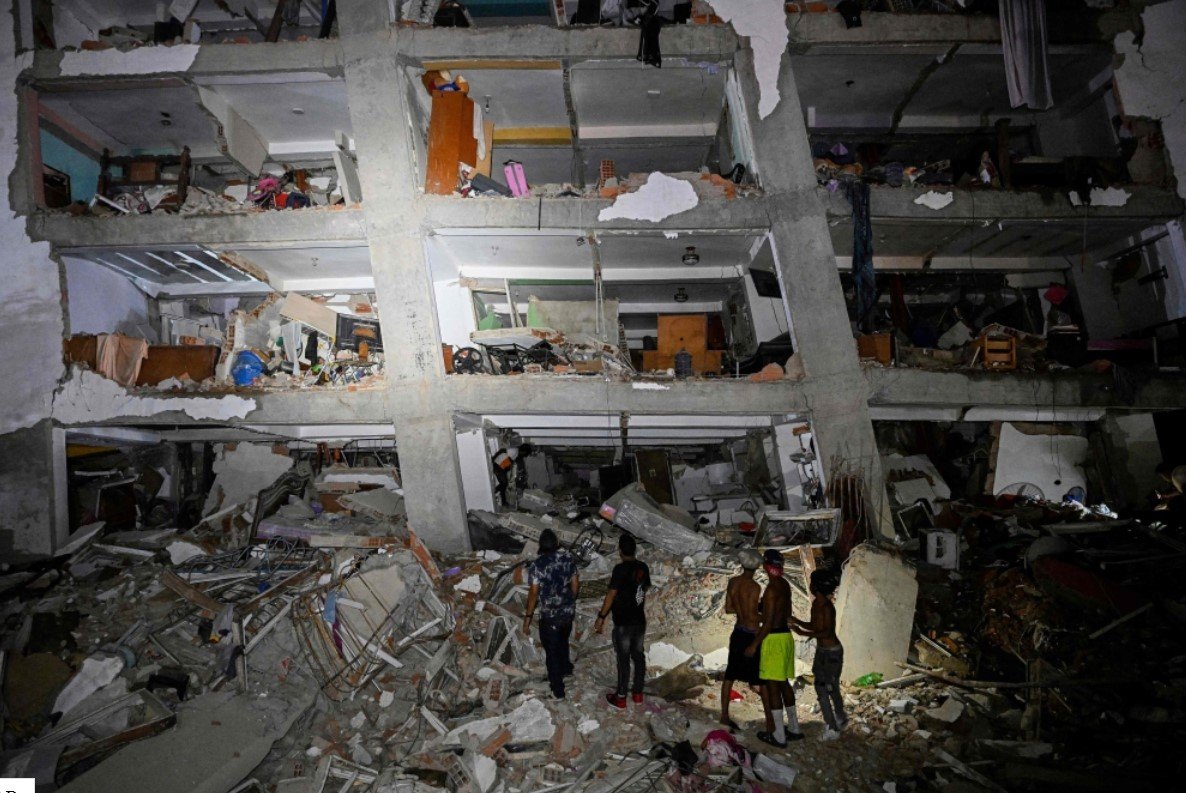
What began as an ordinary evening along Venezuela’s Caribbean coast turned into one of the darkest nights in the country’s recent history.
Within seconds, two massive earthquakes ripped through northern Venezuela, flattening apartment buildings, trapping entire families beneath concrete, and leaving communities desperately searching for survivors.
As rescue workers continue digging through mountains of rubble, heartbreaking stories are emerging from the hardest-hit neighborhoods, where parents, children, and grandparents remain missing while thousands of residents spend another night sleeping in the streets.
Officials have confirmed that at least 164 people were killed and nearly 1,000 others were injured after the twin earthquakes struck on June 25. Authorities caution that the death toll is expected to rise as search teams reach additional collapsed buildings and isolated communities.
For many Venezuelans, the nightmare is far from over.
A Disaster That Struck in Seconds
Residents describe the earthquakes as arriving with almost no warning.
The first powerful tremor sent buildings swaying violently.
Before frightened residents had time to react, a second, even stronger earthquake struck moments later.
The combined force overwhelmed countless buildings that had already been weakened by the initial shaking.
Walls crumbled.
Roofs collapsed.
Entire apartment complexes folded into piles of concrete and twisted steel.
Across the coastal region, terrified families rushed into the streets carrying children, elderly relatives, and whatever belongings they could grab before their homes collapsed behind them.
Many never made it out.
Catia La Mar Becomes Ground Zero
One of the communities suffering the greatest devastation is Catia La Mar, a densely populated coastal city in La Guaira state.
Neighborhoods that once housed thousands of families now resemble disaster zones.
Entire residential towers have either collapsed completely or remain dangerously unstable.
Concrete slabs are stacked on top of crushed vehicles.
Power lines hang across broken streets.
Emergency vehicles struggle to navigate roads blocked by debris.
For residents, the destruction is almost impossible to comprehend.
Yilsmaris Blanco, a 39-year-old survivor, described watching entire sections of her neighborhood disappear.
She said everything around her collapsed within moments.
Although grateful that her own family survived, she said many neighbors remain trapped beneath the ruins.
Her story is now being repeated throughout the city.
Families Wait for Miracles
Outside collapsed apartment buildings, heartbreaking scenes continue to unfold.
Parents call out the names of missing children.
Children search for parents.
Relatives refuse to leave the disaster sites, hoping rescue crews will eventually locate loved ones alive.
Larry Rojas stood helplessly outside a building where members of his family remained trapped beneath the rubble.
Unable to enter the unstable structure himself, he could only watch rescue teams continue searching.
He said the family has lost nearly everything.
Like thousands of others, he spent the night outside with no electricity, running water, or shelter.
Residents fear powerful aftershocks could cause additional buildings to collapse at any moment.
Rescue Teams Race Against Time
Emergency workers have been working without interruption since the earthquakes struck.
Heavy equipment operators, firefighters, police officers, soldiers, and volunteers are carefully removing debris while listening for signs of life beneath collapsed structures.
Every few minutes, crews pause their machinery.
Silence falls across the disaster zone.
Rescuers listen carefully for voices, tapping sounds, or cries for help.
Each discovery brings either relief or heartbreak.
Some survivors have been pulled from the rubble alive.
Others have not been as fortunate.
Officials continue warning that time is becoming increasingly critical for those still trapped beneath collapsed buildings.
Experienced Rescuers Left Shocked
Even veteran emergency responders say they have never witnessed destruction on this scale.
José Pacheco, who has spent roughly three decades responding to disasters, admitted that the devastation is unlike anything he has encountered during his career.
Walking through the affected neighborhoods, he pointed to multiple completely collapsed buildings within only a few city blocks.
Many additional structures remain standing but appear heavily damaged.
Rescue organizations are urgently requesting specialized equipment capable of lifting enormous concrete slabs without placing trapped survivors at additional risk.
Without that equipment, recovery efforts become slower and significantly more dangerous.
Hospitals Struggle to Cope
Medical facilities across northern Venezuela quickly became overwhelmed.
Ambulances transported injured residents continuously throughout the night.
Doctors established temporary treatment areas to care for patients with broken bones, head injuries, crush injuries, and severe trauma.
Some hospitals reportedly experienced temporary power disruptions while simultaneously treating hundreds of earthquake victims.
Medical personnel continue working extended shifts as additional patients arrive from surrounding communities.
Authorities are appealing for medical supplies, blood donations, and emergency assistance.
Basic Services Collapse
The earthquakes did not only destroyed buildings.
They also severely disrupted daily life.
Large portions of La Guaira remain without electricity.
Water service has been interrupted in several neighborhoods.
Cell phone networks experienced outages shortly after the earthquakes, making it difficult for families to contact loved ones.
Many residents spent hours trying unsuccessfully to determine whether relatives were alive.
Supermarkets and pharmacies suffered significant damage.
Several businesses remain closed while engineers inspect buildings for structural safety.
Officials continue urging residents not to enter heavily damaged structures unless authorized.
Fear of Aftershocks
As rescue operations continue, another threat hangs over the disaster zone.
Aftershocks.
Seismologists warn that additional earthquakes commonly follow major seismic events.
Even relatively small aftershocks could trigger further collapses among already weakened buildings.
That possibility has forced thousands of residents to remain outdoors despite limited access to food, clean water, and shelter.
Public parks, sidewalks, parking lots, and open spaces have become temporary camps for families who are afraid to return home.
Many have little more than blankets and bottled water.
Airport and Transportation Challenges
The disaster has also disrupted transportation throughout the region.
Road damage has complicated efforts to deliver heavy rescue equipment into the hardest-hit communities.
Authorities continue assessing bridges, highways, and public infrastructure for safety.
The region’s international airport has also experienced disruptions as officials inspect facilities for structural damage.
Every transportation delay slows humanitarian assistance reaching communities that desperately need food, water, medicine, and rescue equipment.
International Community Responds
As images of the destruction spread worldwide, governments and humanitarian organizations began offering assistance.
Messages of sympathy poured in from around the world.
Emergency response organizations are coordinating with Venezuelan authorities to determine where international assistance can have the greatest impact.
Disaster specialists, medical teams, engineering experts, and humanitarian organizations are preparing to support recovery efforts as Venezuela confronts one of its largest emergencies in years.
The Long Road Ahead
Even after rescue operations eventually conclude, recovery will likely take months—perhaps years.
Thousands of families have lost homes.
Businesses have been destroyed.
Schools, roads, and public buildings require extensive repairs.
Entire neighborhoods may need to be rebuilt.
The economic consequences are expected to be enormous.
Yet amid the destruction, stories of courage continue to emerge.
Neighbors have rescued strangers.
Volunteers have worked through exhaustion.
Doctors have treated patients without stopping.
Families continue refusing to abandon hope.
Final Thoughts
For the people of Catia La Mar and other devastated communities, life changed forever in less than a minute.
The twin earthquakes transformed ordinary neighborhoods into disaster zones and left countless families searching for answers that may not come for days.
With hundreds of casualties already confirmed and rescue operations still underway, authorities believe the full scale of the tragedy has yet to emerge.
As emergency crews continue their race against time, the resilience of the Venezuelan people is becoming one of the few bright spots in an otherwise heartbreaking disaster.
For now, survivors continue waiting.
Waiting for rescue.
Waiting for news of loved ones.
And waiting for the day their communities can begin the difficult journey toward rebuilding after one of the deadliest natural disasters to strike Venezuela in recent memory.