
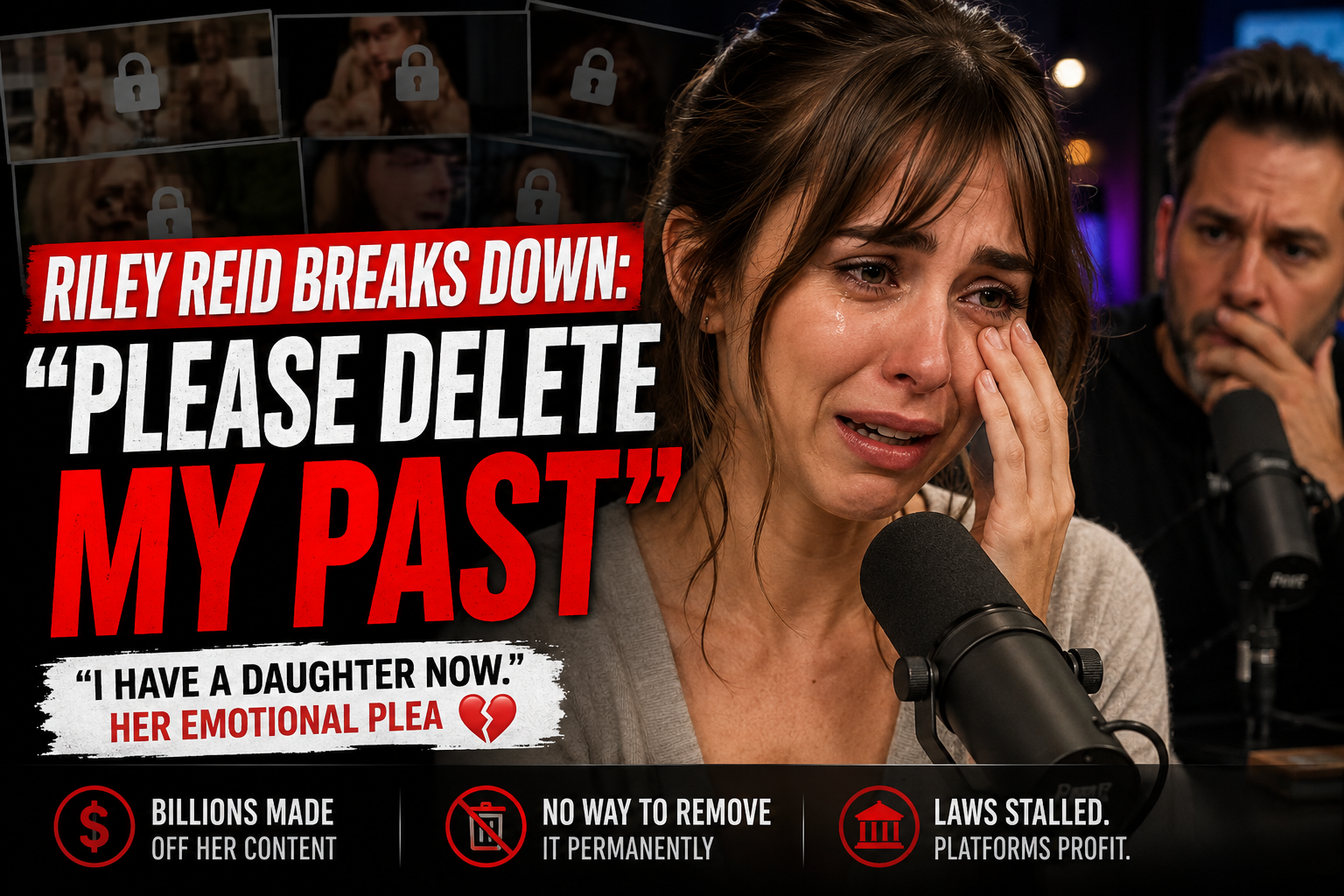
In an emotional moment that quickly spread across social media, former adult film star Riley Reid reportedly broke down during a podcast interview while pleading with fans and adult content platforms to stop sharing her old videos.
Her reason was deeply personal.
“I have a daughter now.”
That single sentence reignited a fierce debate online about the long-term consequences of the adult entertainment industry, digital permanence, and whether performers truly have control over their own image once content is uploaded to the internet.
For years, Reid was one of the most recognizable names in adult entertainment. Millions of people watched her content across major streaming platforms and subscription websites. Studios, websites, and tech companies generated enormous revenue from her popularity.
But according to critics of the industry, the emotional interview exposed something darker behind the idea of “empowerment” that was often promoted around adult content creation.
Because once the cameras stop rolling, the internet rarely forgets.
Riley Reid’s Emotional Plea
During the podcast appearance, Riley Reid reportedly became emotional while discussing motherhood and the fear that her child could eventually discover explicit material from her past.
She asked viewers and platforms to stop reposting and circulating her old videos online.
The clip immediately went viral.
Supporters expressed sympathy, arguing that people should have the right to move on from their past, especially when becoming parents or changing careers.
Others pointed out the harsh reality of internet culture: once digital content spreads globally, removing it completely becomes nearly impossible.
For many observers, the interview highlighted a painful contradiction between the promises of fame and financial success in adult entertainment and the lifelong consequences that can follow performers long after leaving the industry.
The Internet Never Truly Deletes Anything
One of the biggest issues surrounding adult content today is permanence.
Videos are copied, downloaded, mirrored, reposted, archived, and redistributed across thousands of websites worldwide. Even when original creators delete content, copies often continue circulating for years.
This creates a major problem for former performers trying to reclaim privacy or build a different life.
Unlike traditional jobs, adult content can follow someone forever through search engines, social media clips, screenshots, forums, and piracy websites.
Critics argue that many young performers enter the industry without fully understanding how permanent digital exposure can become.
At the time, the money, popularity, and online attention may feel empowering. But years later, circumstances change. People get married, become parents, enter different careers, or simply regret past decisions.
The internet, however, rarely allows a clean break.
The Debate Over “Empowerment”
The controversy also reignited a cultural argument that has existed for years.
Supporters of the adult entertainment industry often frame participation as empowerment, personal freedom, and financial independence. Many creators themselves have defended the industry on those grounds.
Critics disagree.
They argue that much of the industry profits from vulnerable individuals while offering little long-term protection once performers want to leave.
In Riley Reid’s case, critics online claimed the emotional interview exposed the difference between short-term financial gain and long-term emotional consequences.
To them, a mother publicly begging strangers to stop sharing explicit videos is not empowerment; it is evidence of how difficult it can be to escape a digital identity built years earlier.
Others pushed back against that narrative, arguing that regret exists in many industries and that personal choices should still be respected.
The debate quickly became part of a larger political and cultural war surrounding online content, feminism, privacy, and corporate responsibility.
Can Adult Platforms Refuse Removal Requests?
One of the most controversial aspects of the discussion involves the law itself.
Currently, there is no sweeping federal law in the United States requiring adult content platforms to permanently remove legally produced material simply because a performer later changes their mind.
That legal reality has shocked many people online.
While some platforms voluntarily remove content under specific circumstances, others continue hosting or distributing material if they still hold legal rights to it.
Even when official sites remove videos, copies often remain available across countless third-party websites and piracy networks.
Over the years, lawmakers have introduced various proposals focused on digital consent, revenge pornography, and content removal rights. However, broader legislation forcing permanent deletion of consensually created adult content has repeatedly stalled in Congress.
Critics claim powerful tech companies and adult entertainment businesses have little financial incentive to support aggressive removal laws because archived content continues generating traffic and subscription revenue.
The Business Behind the Content
The adult entertainment industry generates billions of dollars globally every year.
Major platforms profit not only from current creators but also from massive libraries of older content that continue attracting viewers long after performers leave the industry.
That creates a difficult ethical question:
Who truly owns a person’s digital identity once content becomes profitable?
Supporters of stronger removal protections argue that performers should have greater control over their image and personal history, especially if they later face harassment, emotional distress, or family consequences.
Opponents warn that retroactively removing legally created content could create complex legal and financial challenges involving contracts, copyrights, and free speech concerns.
Regardless of where people stand politically, Riley Reid’s emotional comments forced many viewers to confront the human side of an industry often discussed only through economics, politics, or morality debates.
Motherhood Changed the Conversation
What made this story resonate so strongly online was the role of motherhood.
People who may have ignored previous discussions about adult content suddenly connected emotionally with the fear of a child discovering explicit material tied to their parents.
That shifted the conversation from abstract internet debates to something more personal and relatable.
For many viewers, Reid’s emotional breakdown was not about politics at all. It was about regret, vulnerability, and the realization that choices made in youth can follow someone into entirely different stages of life.
The internet’s memory can be unforgiving.
And in the age of viral content, screenshots, and endless reposts, escaping a past identity may be harder than ever before.
Final Thoughts
The emotional podcast appearance by Riley Reid has reopened difficult questions about privacy, consent, digital permanence, and the long-term consequences of internet fame.
For supporters, her plea reflects a basic human desire to move forward and protect her family.
For critics of the adult entertainment industry, the moment exposed what they see as exploitation hidden behind the language of empowerment and freedom.
Regardless of perspective, one reality remains clear:
The internet rarely forgets.
And for many former performers, escaping a digital past may be far more difficult than entering it in the first place.