
Love Island has never been accused of being boring.
But this season may have crossed a line that some viewers are no longer willing to ignore.
Just days into the new series, social media has erupted with accusations that producers are manufacturing drama, manipulating outcomes, and turning the show into something very different from the dating competition fans originally fell in love with.
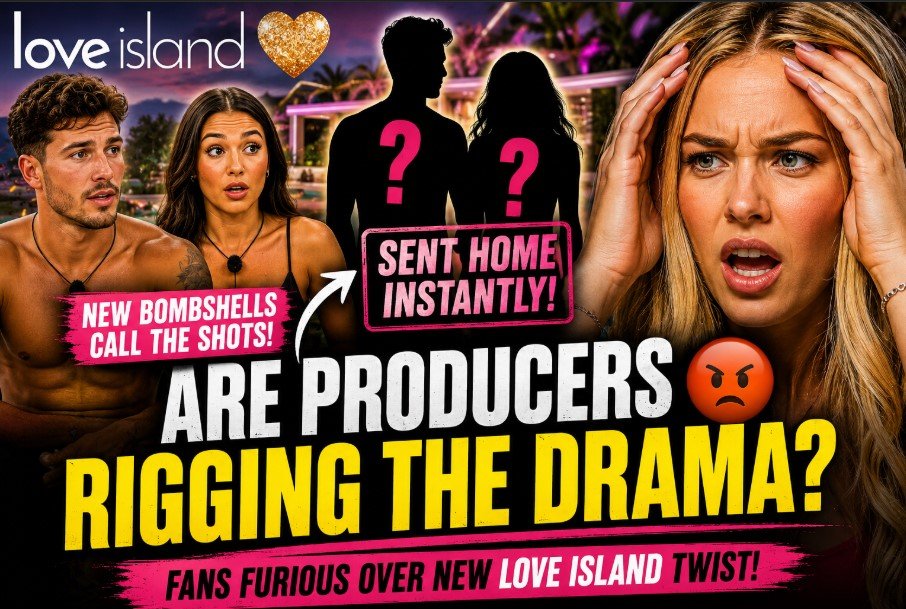
The controversy centers around a shocking new twist that gave incoming bombshells extraordinary power almost immediately after entering the villa.
Instead of slowly integrating into the cast, the new arrivals were handed a decision that could instantly change the course of the entire season.
And viewers have questions.
Lots of them.
The Twist That Started the Backlash
The latest season opened with a major surprise.
New bombshells George Knight and Yasmin Hadlow entered the villa and were immediately given the power to decide which male and female Islanders would be sent home.
Not after weeks of getting to know everyone, or after a public vote, or even after a challenge.
Immediately.
For some viewers, it was exciting television.
For others, it felt like producers were taking control away from both contestants and the audience.
Within minutes, social media platforms were flooded with complaints, theories, and heated debates.
Many fans asked the same question:
Why should newcomers decide who stays and who goes?
Are Producers Creating Drama Instead of Letting It Happen?
One of the biggest criticisms aimed at reality television is that producers sometimes focus more on creating conflict than documenting reality.
Love Island has faced those accusations before.
This season’s opening twist has brought them back.
Critics argue that sudden eliminations and surprise powers create artificial tension that wouldn’t exist naturally.
Supporters of the show disagree.
They argue that unexpected twists are exactly what keep the format fresh.
After more than a decade on television, producers face constant pressure to find new ways to surprise audiences.
Without change, many viewers might stop watching altogether.
The debate highlights a larger question facing reality television.
How much producer involvement is too much?
Fans Feel Like Their Vote Matters Less
Historically, one of Love Island’s biggest strengths has been audience participation.
Viewers vote, influence outcomes, and help determine which couples survive.
That interactive element makes fans feel invested.
But some critics believe recent changes have reduced that influence.
When producers introduce major twists before the public has a chance to vote, some viewers feel sidelined.
The frustration isn’t necessarily about any particular contestant.
It’s about control.
Many fans believe they should be the ones deciding who stays and who leaves.
Not producers, bombshells or behind-the-scenes decision-makers.
The Social Media Explosion
If the producers wanted attention, they got it.
The twist quickly became one of the most discussed topics among Love Island fans online.
Some viewers praised the move as brilliant television.
Others described it as unfair.
The most extreme critics went further, suggesting the show is becoming increasingly scripted.
There is no evidence that the show is scripted.
Contestants continue to make their own choices, and relationships develop in real time.
However, perception matters.
And right now, many viewers believe producers are steering the narrative more aggressively than ever before.
Why Reality TV Keeps Moving in This Direction
The truth may be simpler than many fans realize.
Competition.
Reality television is more crowded than ever.
Streaming services.
Dating shows.
Social media influencers.
Short-form video platforms.
Every entertainment option is fighting for attention.
That means producers constantly need bigger surprises.
Bigger twists.
Bigger headlines.
The challenge is finding the balance between excitement and authenticity.
Push too far, and viewers start questioning the entire premise of the show.
The Ratings Question
There is another reason producers may embrace controversial twists.
Controversy creates conversation.
Conversation creates engagement.
Engagement creates ratings.
Whether viewers love a twist or hate it, they’re talking about it.
In today’s entertainment landscape, being ignored is often worse than being criticized.
The intense reaction to the latest twist proves one thing:
People are paying attention.
Very close attention.
Could the Strategy Backfire?
Possibly.
Reality television depends heavily on trust.
Viewers don’t expect perfection.
But they do want to believe that outcomes feel earned.
If too many fans start believing that producers are controlling events behind the scenes, the show’s credibility could suffer.
That’s the risk with every major twist.
What generates excitement today can create skepticism tomorrow.
Love Island’s Biggest Challenge
The show’s long-term success depends on maintaining a delicate balance.
Fans want surprises.
But they also want authenticity.
They want drama.
But they want that drama to feel real.
They want entertainment.
But they don’t want to feel manipulated.
Finding that balance becomes harder every season.
Especially when expectations continue rising.
Final Thoughts
Love Island’s latest twist has accomplished exactly what television producers hope for.
Everyone is talking about it.
But not everyone is happy.
Some viewers see an exciting evolution of the format.
Others see evidence that producers are increasingly shaping the story themselves.
The truth probably lies somewhere in the middle.
What is certain is that the debate isn’t going away anytime soon.
And if social media reactions are any indication, this could become one of the most controversial seasons in Love Island history.
Whether that’s good news or bad news depends on who you ask.