
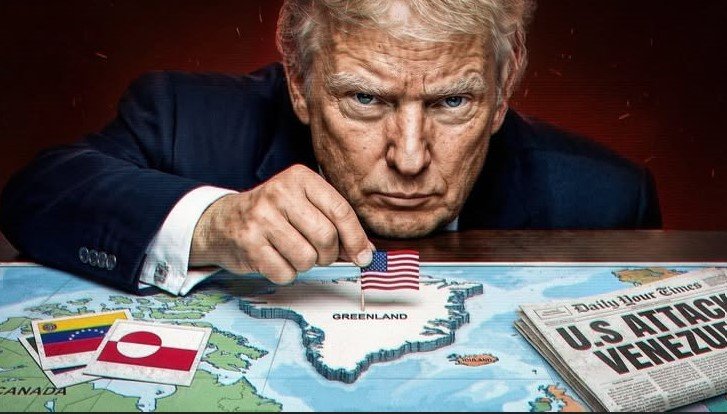
President Donald Trump has never been a politician known for subtlety.
Whether through campaign rallies, social media posts, policy announcements, or headline-grabbing statements, Trump has spent nearly a decade dominating American political conversation in ways few modern presidents ever have.
Now, a new debate is emerging over something far more symbolic:
How often should Trump’s name and image appear on America’s most important public landmarks, institutions, and national symbols?
From AI-generated images depicting Trump on Mount Rushmore to proposals involving U.S. currency and controversies surrounding the Kennedy Center, critics and supporters are once again clashing over the former president’s place in American history.
To supporters, the attention reflects the enormous impact Trump has had on American politics.
To critics, it raises concerns about self-promotion and personal branding becoming intertwined with public institutions.
The controversy highlights a broader question facing Americans:
What role should living political figures play in shaping national symbols?
The Mount Rushmore Conversation Returns
One of the most discussed examples involves Mount Rushmore.
For years, some Trump supporters have suggested that Trump deserves consideration alongside the four presidents currently featured on the monument: George Washington, Thomas Jefferson, Theodore Roosevelt, and Abraham Lincoln.
The conversation gained renewed attention after AI-generated images showing Trump carved into Mount Rushmore began circulating widely online.
While no official proposal exists to alter the monument, the images generated significant discussion.
Supporters argue that Trump’s influence on modern American politics is undeniable.
Critics counter that comparing contemporary political figures to presidents whose legacies have been studied for generations is premature.
The debate quickly spread across social media platforms.
The $250 Bill Proposal
Another controversy emerged around proposals suggesting Trump’s image could appear on a new $250 bill.
Supporters argued that Trump’s role in reshaping the Republican Party and his influence on national politics make him deserving of such recognition.
Opponents immediately pushed back.
Historically, American currency has generally featured deceased presidents and statesmen rather than active political figures.
Critics argued that placing a living politician on currency would break with long-standing traditions and risk politicizing national symbols.
Although no official currency redesign has been approved, the discussion alone generated significant public interest.
For many observers, it became another example of how Trump’s political presence extends beyond traditional politics.
The Kennedy Center Dispute
The debate intensified further when controversy erupted surrounding the Kennedy Center.
Political disputes over leadership, naming rights, and renovation plans led to renewed attention regarding Trump’s relationship with major cultural institutions.
Supporters argued that Trump was attempting to reform institutions they believe have become politically biased.
Critics viewed the efforts differently.
Many argued that public cultural institutions should remain separate from partisan politics.
The controversy became another chapter in a larger discussion about the role political leaders should play in shaping national landmarks and cultural organizations.
Trump’s Supporters See a Historic Figure
To Trump’s supporters, these debates miss the larger picture.
They argue that few presidents have transformed American politics as dramatically as Trump.
His influence reshaped the Republican Party, and campaigns altered political communication.
His presidency changed debates surrounding immigration, trade, foreign policy, and the federal government.
From this perspective, discussions about monuments and public recognition simply reflect historical reality.
Supporters believe future historians will view Trump as one of the defining political figures of the 21st century.
As a result, they see public recognition as both appropriate and inevitable.
Critics Raise Concerns
Critics see the issue very differently.
They argue that national symbols should represent the country as a whole rather than individual political movements.
Some worry that frequent discussions about Trump’s image on monuments, buildings, and currency give the impression of personality-driven politics.
Others argue that historical judgment should occur over decades rather than during active political careers.
Many historians note that presidential legacies often evolve significantly after leaders leave office.
From this perspective, allowing time for historical evaluation remains important.
The Role of Social Media
Social media has played a major role in amplifying these controversies.
AI-generated images, memes, political graphics, and viral posts have made discussions about monuments and symbolism far more visible than in previous generations.
In many cases, proposals that are never formally introduced still generate millions of views online.
That reality can blur the line between serious policy discussions and internet-driven political culture.
The result is a constant stream of debates over symbolism, identity, and political legacy.
Why Symbolism Matters
National symbols carry powerful meaning.
Monuments, memorials, currency, and public institutions help shape how future generations understand history.
Because of that, debates involving these symbols often become emotional.
Supporters and critics alike recognize that public recognition can influence how historical figures are remembered.
The disagreement is not simply about Trump.
It is about who gets honored, when they get honored, and who makes those decisions.
A Reflection of Modern Politics
The controversy surrounding Trump’s image also reflects broader changes in American politics.
Political leaders today operate in an environment shaped by social media, constant media coverage, and highly polarized public opinion.
As a result, discussions that once might have occurred quietly among historians now unfold publicly and in real time.
Trump’s supporters and critics frequently view the same events through dramatically different lenses.
That reality helps explain why debates about monuments and symbols generate such intense reactions.
What Happens Next?
For now, most of these discussions remain largely symbolic.
There are no approved plans to add Trump to Mount Rushmore.
No official redesign has placed him on U.S. currency.
And debates surrounding public institutions continue to evolve.
Nevertheless, the conversations themselves reveal something important.
Regardless of political affiliation, few people deny Trump’s impact on American politics.
The real disagreement centers on how that impact should be remembered.
Final Thoughts
The debate over Donald Trump’s image appearing on national landmarks, currency, and public institutions is ultimately a debate about history itself.
Supporters view him as a transformational leader whose influence deserves recognition.
Critics argue that public symbols should remain focused on broader national values rather than individual political figures.
As America continues debating Trump’s legacy, one thing is clear:
His influence extends far beyond elections and policy battles.
Whether admired or criticized, Donald Trump remains one of the most consequential and controversial figures of modern American political history.
The argument over where his image belongs may continue long after his political career ends.