
A debate that has been quietly developing for years is now moving into the spotlight.
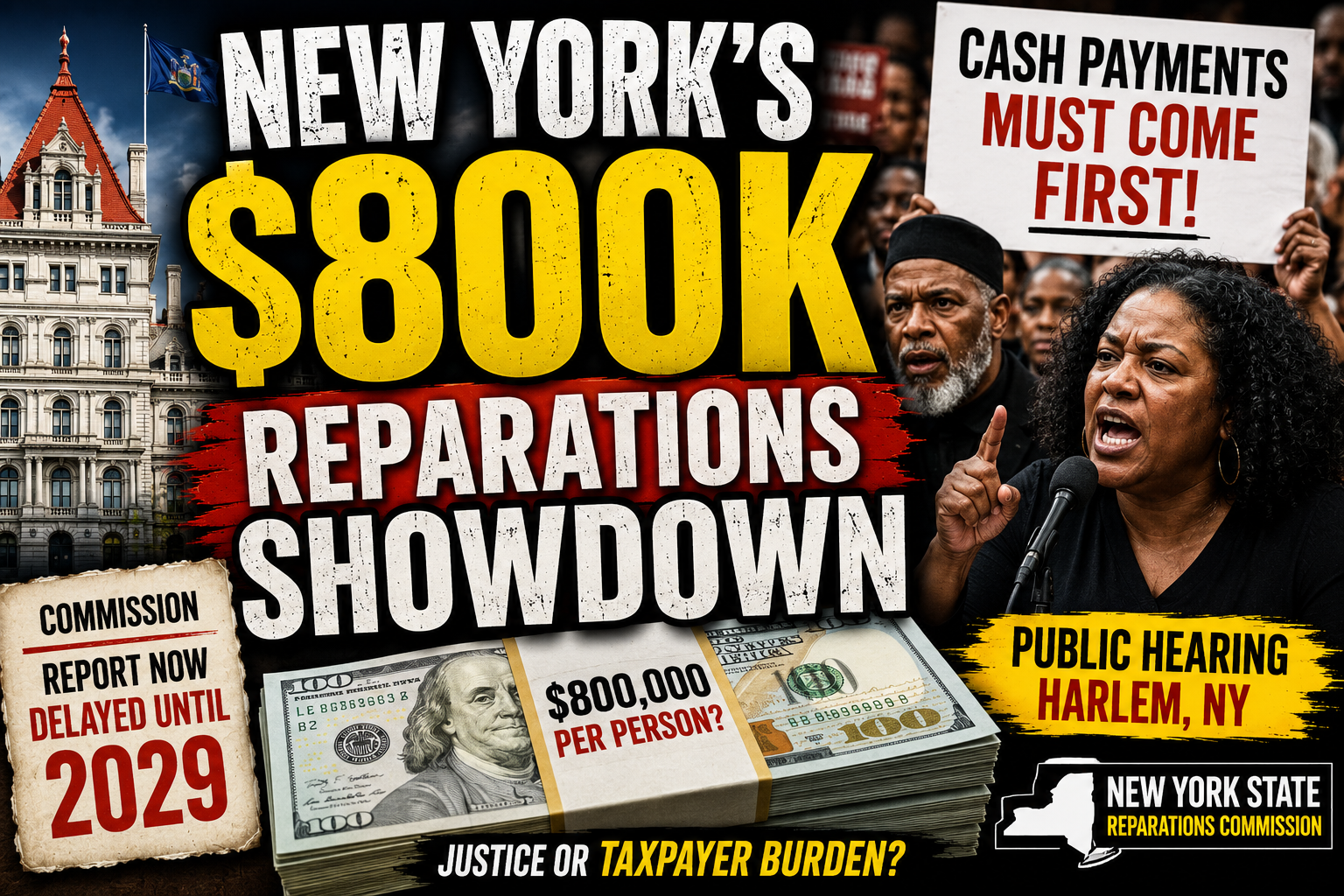
At the final public hearing of New York’s reparations commission, some residents urged state officials to consider direct cash payments as the centerpiece of any future reparations program. Among the proposals discussed was a call for payments of up to $800,000 per eligible recipient, a figure that immediately ignited controversy online and renewed a national debate about reparations, historical justice, and taxpayer responsibility.
Supporters say financial compensation is necessary to address generations of economic inequality.
Critics argue the proposals are unrealistic, divisive, and financially impossible.
As the commission prepares its final report, one thing is clear: the conversation is only getting louder.
The Hearing That Sparked New Controversy
The New York State Community Commission on Reparations Remedies recently held its final public hearing in Harlem.
During testimony, several speakers argued that direct payments should be prioritized over other forms of reparative action.
Some advocated for large cash awards.
Others proposed long-term economic programs aimed at addressing wealth disparities.
One witness suggested that foundational Black Americans should receive $800,000 each to address housing, business development, and financial recovery.
Another proposed creating a modern version of a Freedmen’s Bureau that would function as an economic institution focused on Black communities.
The testimony quickly drew national attention.
What the Commission Can and Cannot Do
One important fact has been lost in much of the public discussion.
The commission cannot approve reparations payments.
It cannot write checks, create new taxes, or authorize spending.
Its role is advisory.
The commission was created after legislation signed by Governor Kathy Hochul established a body tasked with studying the effects of slavery, discrimination, and systemic inequities.
The group’s responsibility is to collect testimony, review historical evidence, and submit recommendations to state leaders.
Any future action would require approval from lawmakers.
Why Supporters Say Cash Payments Matter
Advocates of reparations argue that economic disparities did not appear overnight.
They point to generations of discriminatory policies involving housing, lending, education, and employment.
According to supporters, those policies prevented many Black families from accumulating wealth in the same way as other Americans.
From this perspective, direct payments are not viewed as charity.
They are viewed as compensation.
Many advocates argue that symbolic gestures alone cannot address the economic harm that has accumulated across generations.
For them, financial restitution represents the most direct path toward meaningful change.
Critics Say the Numbers Don’t Add Up
Opponents see the issue very differently.
They argue that large-scale cash payments would place enormous financial burdens on taxpayers.
Some critics question how eligibility would be determined.
Others argue that modern residents should not be financially responsible for actions committed generations ago.
Still others worry that reparations programs could deepen racial divisions rather than promote unity.
For many opponents, the debate isn’t simply about cost.
It’s about fairness.
They believe the government should focus on policies that help struggling Americans regardless of race.
The Political Risk for New York Democrats
The reparations debate arrives at a complicated moment for state leaders.
Democratic officials have generally supported studying reparations and examining historical injustices.
However, large direct-payment proposals can create political challenges.
Polling across the country has often shown significant public disagreement regarding cash reparations.
As a result, elected officials frequently find themselves balancing activist demands against broader voter concerns.
That balancing act may become increasingly difficult as recommendations move closer to completion.
Why the Report Keeps Getting Delayed
Another controversy involves the timeline itself.
The commission has already delayed its final report multiple times.
Officials have repeatedly pushed back the deadline, which they originally expected years ago.
The latest target date is now 2029.
Critics argue the delays suggest the process lacks direction.
Supporters counter that researching complex historical issues requires time and careful analysis.
Regardless of the reason, the extended timeline means any major policy decisions remain years away.
Could New York Set a National Precedent?
The outcome of New York’s reparations debate could influence discussions far beyond the state’s borders.
Several states and local governments have explored reparations-related initiatives in recent years.
Supporters hope New York can become a model for future programs.
Opponents fear exactly that.
Both sides understand that what happens in New York may shape conversations elsewhere.
That’s one reason the issue continues attracting national attention.
The Bigger Question Facing America
At its core, the reparations debate asks a difficult question.
How should a society address historical injustices that continue influencing present-day outcomes?
There is no simple answer.
Some believe financial compensation is necessary.
Others believe investments in education, economic opportunity, and community development offer better solutions.
Still others reject reparations entirely.
The disagreement reflects deeper divisions about history, responsibility, and government policy.
Final Thoughts
The testimony presented at New York’s final reparations hearing does not guarantee future payments.
The government has not approved any checks, nor has it enacted a reparations program.
However, the hearing revealed just how passionate and polarized the debate has become.
Supporters see an opportunity to address long-standing economic inequalities.
Critics see proposals they believe would be costly and divisive.
The commission’s final recommendations may still be years away.
But the political battle surrounding reparations is already underway.
And judging by the reactions so far, it is unlikely to quiet down anytime soon.