
Prisons are designed to separate dangerous individuals from society.
But what happens when inmates decide to become judge, jury, and executioner themselves?
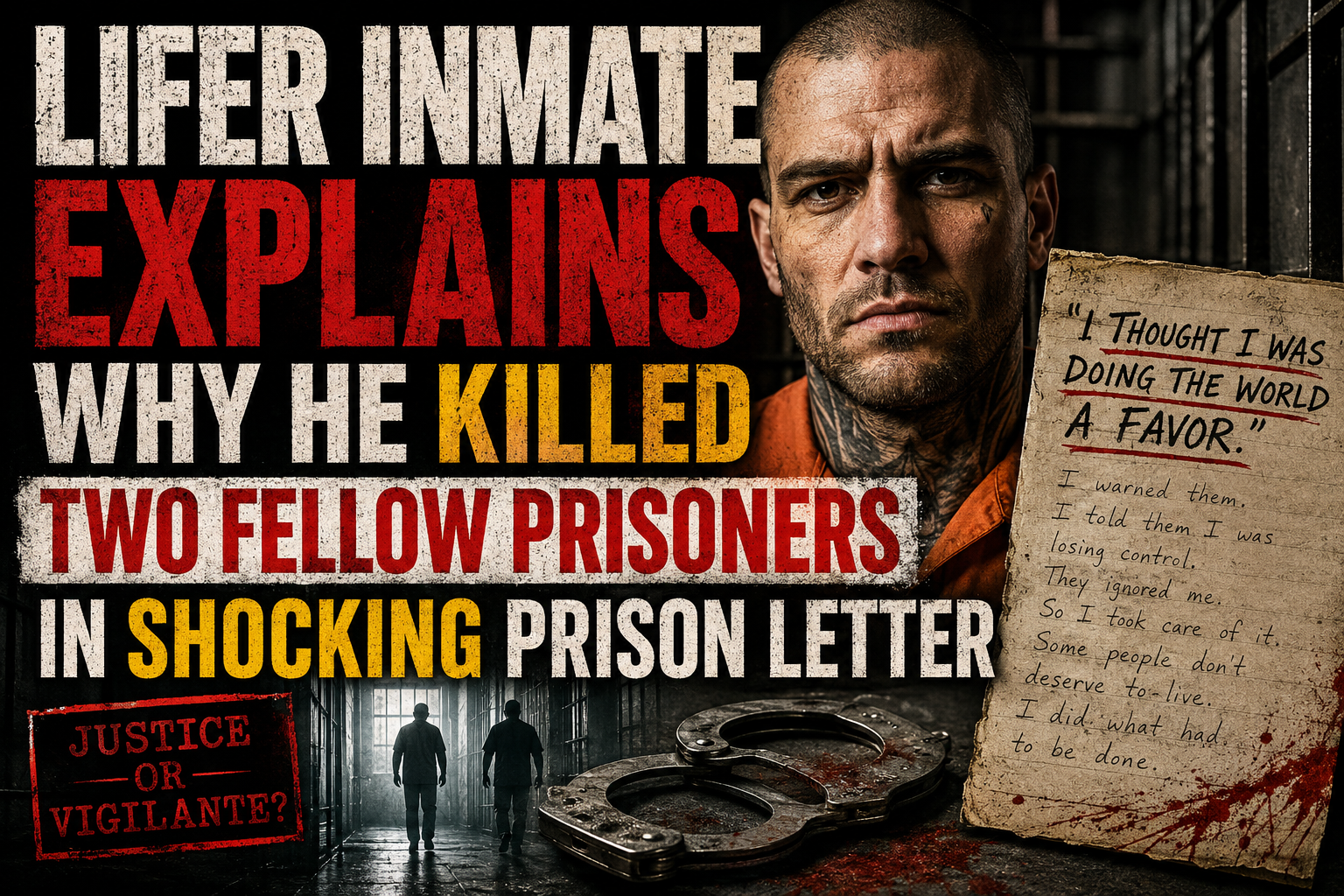
That question has resurfaced following renewed attention to a chilling letter written by inmate Jonathan Watson, a convicted murderer already serving a life sentence when he allegedly killed two fellow prisoners behind bars.
What makes the case particularly controversial is not simply the violence itself.
It is Watson’s explanation.
According to his own account, he believed he was carrying out a form of justice.
In a letter later quoted by media outlets, Watson claimed he “thought I was doing the world a favor.”
Those words continue to fuel fierce debate years after the killings.
Some people view him as a vigilante who took matters into his own hands.
Others see him as exactly what the justice system warns against: a murderer deciding that his personal beliefs justify taking human lives.
A Prison Already Filled With Violent Men
Most people assume that once someone receives a life sentence, there is little left to lose.
That assumption often makes prison violence especially dangerous.
Unlike crimes committed on the outside, prison assaults frequently involve individuals who are already serving decades or life behind bars.
Additional punishment may have limited deterrent value.
That reality creates a unique environment where personal disputes, gang conflicts, and inmate codes can sometimes have deadly consequences.
According to Watson’s account, tensions began after a prisoner convicted of crimes involving child abuse was transferred into his housing unit.
Watson claimed the inmate’s behavior immediately angered him.
The Warnings He Says Went Ignored
In his version of events, Watson alleged that he warned correctional staff multiple times that he was struggling to control his anger.
He claimed he informed guards that a violent confrontation was becoming increasingly likely.
Whether those warnings were given exactly as described remains a matter of record and interpretation.
However, Watson maintained that prison officials failed to intervene.
According to his letter, he believed the situation was escalating while no action was being taken.
Eventually, he said, he reached a breaking point.
The First Killing
Watson later described attacking the inmate using another prisoner’s cane.
The assault proved fatal.
Authorities treated the incident as a homicide.
The victim’s criminal history did not change the legal reality of what had occurred.
A prisoner had been beaten to death inside a correctional facility.
For many observers, that should have been the end of the story.
But it wasn’t.
A Second Death
According to Watson’s own account, the violence did not stop after the first killing.
He claimed that while attempting to surrender and report what had happened, he encountered another inmate convicted of offenses involving children.
Watson then attacked and killed that prisoner as well.
The second killing transformed the incident from a single homicide into a far larger controversy.
Authorities again made clear that the background of the victims did not excuse the crimes.
The law does not permit private citizens or inmates to determine who deserves to live or die.
“I Thought I Was Doing the World a Favor”
The most widely discussed part of the case remains Watson’s explanation.
In the letter later reported by news outlets, he argued that he believed his actions benefited society.
The statement immediately divided public opinion.
Some people expressed sympathy for his motivations while condemning the violence.
Others argued that allowing emotions or personal beliefs to justify murder creates a dangerous precedent.
The quote spread rapidly because it touches on one of society’s oldest questions:
Can vigilantism ever be justified?
The Debate Over Prison Justice
Cases like this often generate intense reactions because they involve crimes that provoke strong emotional responses.
Many people feel deep anger toward individuals convicted of harming children.
That anger can sometimes lead people to view violence against such offenders differently than violence against other inmates.
Yet legal systems are built around a different principle.
Punishment is determined through courts, judges, juries, and established laws.
The justice system is designed specifically to prevent individuals from taking punishment into their own hands.
Supporters of that principle argue that once society starts making exceptions, the rule of law begins to break down.
Why Authorities Rejected Watson’s Reasoning
Prison officials and law enforcement agencies have consistently maintained that Watson’s actions were criminal acts.
Regardless of the victims’ convictions, the law does not provide inmates with authority to carry out their own version of justice.
Officials emphasized that prison sentences are imposed by courts.
Additional punishment cannot be determined by other prisoners.
From a legal standpoint, the victims’ criminal records were separate from the crimes Watson committed.
That distinction remains central to how authorities view the case.
The Reality of Prison Culture
The incident also highlights an uncomfortable reality about life inside many prisons.
Certain categories of offenders often face hostility from other inmates.
Crimes involving children are among the most stigmatized offenses within prison populations.
Former correctional officers and criminal justice experts have long acknowledged that inmates convicted of such crimes frequently become targets.
That does not make violence inevitable.
Nor does it make it lawful.
But it helps explain why prison administrators often devote significant resources to inmate classification, housing decisions, and security measures.
A Case That Still Sparks Debate
Years later, Watson’s letter continues to circulate online because it forces people to confront difficult questions.
Should motives matter when evaluating violent crimes?
Can someone commit murder while believing they are acting morally?
Does society benefit when individuals take justice into their own hands?
Or does that path inevitably lead to chaos?
There are no easy answers.
But the questions continue to resonate.
Final Thoughts
Jonathan Watson’s case remains one of the more controversial prison stories in recent memory.
A man already serving life for murder claimed he killed two fellow inmates because he believed he was protecting society.
Authorities disagreed.
The legal system treated the deaths as homicides regardless of who the victims were or why Watson claimed he acted.
His letter may explain his thinking.
It does not change the outcome.
And that distinction may be the most important lesson of all.
In a society governed by laws, justice is meant to be decided in courtrooms not carried out by individuals who believe they know better than the system itself.