
During the height of the COVID-19 pandemic, millions of American families were struggling to survive. Parents lost jobs. Schools shut down. Children who relied on free school lunches suddenly faced food insecurity on a massive scale.
The federal government responded with emergency programs designed to feed vulnerable children across the country. Billions of taxpayer dollars were released quickly so nonprofits and food distribution groups could provide meals to kids in need.
But according to federal prosecutors, one woman saw that crisis as an opportunity for personal enrichment.
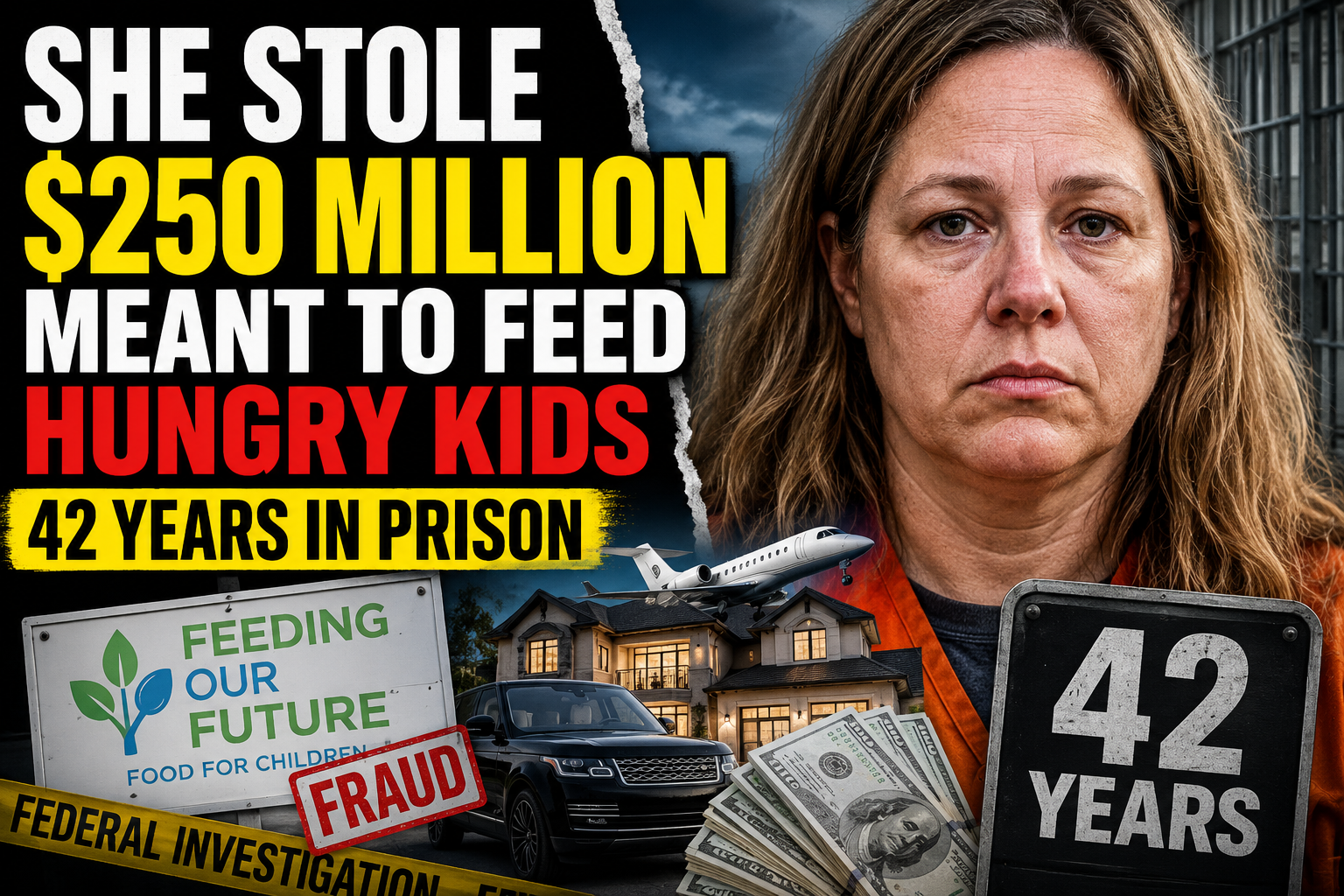
Aimee Bock, founder of the Minnesota nonprofit Feeding Our Future, has now been sentenced to 42 years in federal prison after orchestrating what prosecutors called “the single largest COVID-19 fraud scheme in the country.”
Authorities say the scheme stole approximately $250 million in taxpayer funds that were supposed to feed hungry children during the pandemic.
Instead of helping families, prosecutors say the money was diverted into luxury lifestyles, expensive cars, international travel, and real estate investments.
The sentencing marks one of the most significant punishments handed down in a pandemic fraud case in the United States.
What Was Feeding Our Future?
Feeding Our Future was a Minnesota-based nonprofit organization that participated in federally funded child nutrition programs.
During COVID-19, the government loosened certain restrictions to allow nonprofits and food distribution sites to operate more freely. The intention was simple: get food to children as quickly as possible while schools remained closed.
Under normal circumstances, these programs require extensive oversight and verification. But during the pandemic, emergency conditions accelerated approvals and expanded reimbursement opportunities.
Federal investigators say Bock and her network exploited those relaxed rules.
According to prosecutors, Feeding Our Future falsely claimed to be serving millions of meals to children at hundreds of food distribution sites across Minnesota.
Many of those sites allegedly did not exist.
Others reportedly served only a fraction of the meals claimed in reimbursement requests.
Some sites were accused of inventing fake attendance rosters filled with names of children who either did not exist or never received meals.
Investigators said fabricated invoices, forged documents, and falsified meal counts were used to convince the federal government to release enormous amounts of money.
How the Fraud Allegedly Worked
Federal authorities say the operation depended on a simple formula:
Create fake meal distribution numbers, submit reimbursement claims, receive taxpayer money, then divide the profits among co-conspirators.
Prosecutors argued that Feeding Our Future approved fraudulent meal sites and sponsored organizations that dramatically inflated the number of children they claimed to feed.
Some defendants reportedly claimed to serve thousands of meals per day from tiny storefronts or locations with little evidence of food preparation.
Others allegedly submitted paperwork showing impossible numbers that exceeded the population of children in surrounding communities.
The government said the fraudulent claims were so massive that some operations were supposedly feeding more children daily than existed in certain neighborhoods.
As federal funds poured in, investigators say participants began spending aggressively.
Authorities linked the money to luxury homes, high-end vehicles, jewelry, commercial properties, and lavish travel expenses.
Several defendants allegedly moved money through shell companies and bank accounts in an attempt to conceal the source of the funds.
The Pandemic Context Makes the Crime Worse
COVID-19 created extraordinary circumstances around the world.
Families were isolated. Schools were closed. Food insecurity surged across America.
Programs like the Federal Child Nutrition Program became lifelines for struggling households.
That is one reason the case generated such outrage nationwide.
Federal prosecutors emphasized that this was not ordinary financial fraud. They argued the money was intended for children during one of the most difficult periods in recent American history.
While communities worried about survival, prosecutors say massive amounts of public money were being siphoned away for personal luxury.
According to court documents, the fraud operation became incredibly sophisticated and involved dozens of individuals.
The Department of Justice described it as one of the most extensive pandemic-era fraud operations uncovered in the United States.
The Federal Investigation
The investigation into Feeding Our Future grew over several years and involved multiple federal agencies.
Authorities used financial records, surveillance operations, bank transactions, witness testimony, and undercover evidence to build the case.
In 2022, federal agents carried out large-scale raids connected to the investigation.
The case quickly expanded into one of the largest fraud prosecutions in Minnesota history.
Dozens of people were eventually charged.
Federal prosecutors alleged that participants coordinated false invoices, fake food orders, fabricated attendance records, and money laundering operations.
Investigators also tracked millions of dollars flowing into personal accounts and luxury purchases.
The case attracted national media attention because of both the scale of the fraud and the intended victims: children during a public health emergency.
Aimee Bock’s Conviction
As the founder of Feeding Our Future, Aimee Bock became the central figure in the prosecution’s case.
Federal prosecutors argued that she knowingly enabled fraudulent meal sites and ignored obvious warning signs because the scheme generated enormous profits.
They accused her of using her nonprofit organization as the gateway for fraudulent reimbursement claims.
According to prosecutors, Bock profited while presenting herself publicly as someone helping vulnerable communities during the pandemic.
Her defense argued she was being unfairly blamed for the actions of others and maintained that the government failed to prove she intentionally directed fraud on the scale alleged.
But the jury ultimately sided with prosecutors.
Following her conviction, the court handed down a 42-year federal prison sentence on May 21, 2026, in Minneapolis.
The sentence sends a strong message about how seriously federal courts are treating pandemic fraud cases involving taxpayer funds and programs meant to protect children.
Why the Sentence Is So Severe
Forty-two years is an extraordinarily long sentence for a white-collar crime case.
But several factors likely influenced the punishment.
First was the sheer scale of the fraud. Prosecutors estimated losses at approximately $250 million.
Second was the vulnerability of the intended beneficiaries. The funds were designed to feed children during a national emergency.
Third was the level of organization involved. Prosecutors described the operation as highly coordinated and deliberate.
Federal courts often increase sentences when crimes involve large financial losses, abuse of public trust, and extensive planning.
The court also likely considered the broader damage caused to public confidence in emergency assistance programs.
Cases like this can make taxpayers more skeptical about future relief efforts, even when legitimate families genuinely need help.
Public Reaction
The case triggered widespread anger online and across political circles.
Many Americans expressed outrage that money intended for hungry children could allegedly be diverted into luxury purchases and personal wealth.
Critics argued the case exposed weaknesses in how emergency pandemic funds were distributed and monitored.
Others pointed to the speed at which COVID relief programs were implemented, saying oversight systems simply could not keep pace with the urgency of the crisis.
Some observers also warned that massive fraud during the pandemic was not limited to one organization or one state.
Federal authorities have pursued numerous COVID-related fraud investigations involving fake businesses, fraudulent unemployment claims, forged loans, and abuse of relief programs.
Still, the Feeding Our Future case stands out because of its enormous financial scale and the emotionally charged nature of the allegations.
A Warning About COVID Fraud
The federal government has spent years tracking down individuals accused of exploiting pandemic relief programs.
Authorities repeatedly warned that emergency funding programs created opportunities for fraudsters seeking quick money.
The Department of Justice has aggressively prosecuted cases involving stolen relief funds, fake businesses, identity theft, and fraudulent reimbursements.
The sentence against Aimee Bock may become one of the strongest examples yet of how severe those consequences can be.
Federal prosecutors clearly wanted this case to send a national message.
If convicted of stealing taxpayer money intended for vulnerable people during a crisis, defendants should expect grave punishment.
Final Thoughts
The Feeding Our Future scandal is more than just another fraud case.
It represents a breakdown of trust during one of the most difficult moments in recent history.
Programs meant to protect children became targets for exploitation.
While families worried about feeding their kids, prosecutors say massive sums of public money were being redirected into private wealth and luxury lifestyles.
Now, one of the central figures in the case will spend decades behind bars.
Forty-two years.
For federal prosecutors, the message is clear: stealing from programs designed to feed children during a national emergency is a crime that carries devastating consequences.