
Millions of Americans are enduring scorching temperatures, but in a stunning weather twist, parts of the United States are now under a Winter Storm Warning at the height of summer.
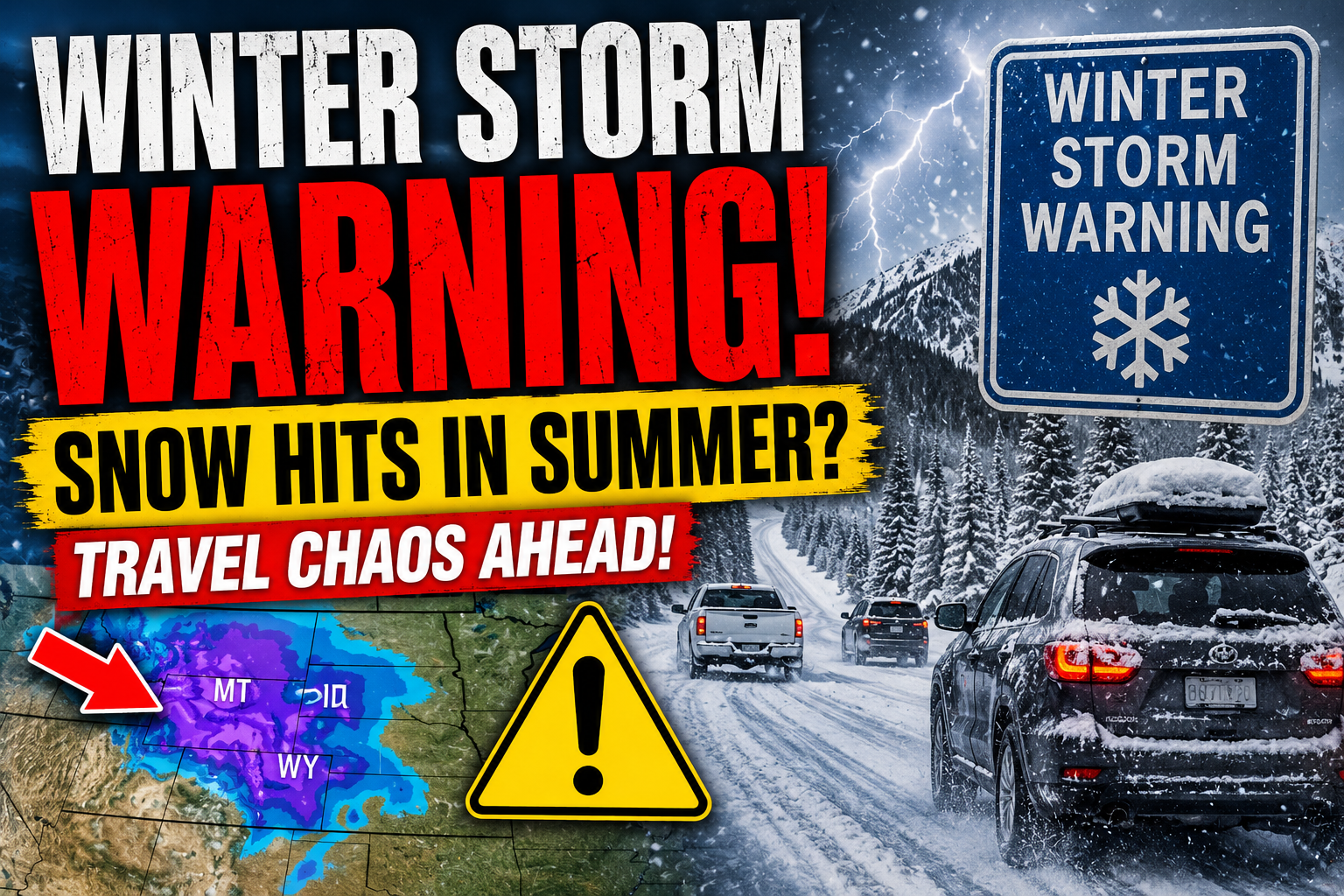
Forecasters say higher elevations near the borders of Idaho, Montana, and Wyoming could receive several inches of heavy snow over the coming days, creating dangerous travel conditions for campers, hikers, and holiday travelers heading into the Fourth of July week.
The unusual forecast has shocked weather watchers across the country, with many asking the same question:
How can a winter storm happen while much of America is baking under a dangerous heat wave?
The answer lies in one of the most dramatic weather contrasts seen this summer.
A Tale of Two Seasons
While cities across the Midwest and East brace for temperatures climbing into the upper 90s and even above 100 degrees, mountain communities thousands of feet above sea level are preparing for snow.
Meteorologists say a powerful upper-level weather system moving across the northern Rockies is pulling unusually cold air into high elevations.
Combined with abundant moisture, the setup is expected to produce accumulating snowfall in areas that rarely see significant snow this late in June.
For residents and visitors, the dramatic shift serves as a reminder that mountain weather can change rapidly regardless of the season.
Winter Returns in June
The National Weather Service has issued Winter Storm Warnings for parts of the mountainous region where Idaho, Montana, and Wyoming meet.
Forecasters warn that elevations above roughly 6,500 feet could receive several inches of snow, with localized totals approaching eight inches in some areas.
Strong winds may accompany the snowfall, reducing visibility and making travel difficult across mountain passes.
Officials are urging anyone planning backcountry travel to reconsider their plans or carry winter survival supplies if travel cannot be delayed.
Holiday Travel Could Be Affected
The timing of the storm is particularly concerning.
Many Americans are already beginning road trips ahead of Independence Day celebrations.
Campgrounds, hiking trails, and national parks throughout the northern Rockies typically become busy during this period.
Unexpected snowfall could create hazardous roads, slippery hiking trails, and rapidly changing conditions for visitors unfamiliar with mountain weather.
Authorities are advising travelers to monitor updated forecasts before heading into higher elevations.
Heat in One Region, Snow in Another
The contrast between weather systems is remarkable.
Large portions of the central and eastern United States remain under dangerous heat alerts as a powerful heat dome expands across the country.
Some communities are expected to experience temperatures exceeding 100 degrees, while overnight temperatures remain unusually warm, increasing health risks for vulnerable populations.
Meanwhile, only a few states away, winter coats, snow tires, and emergency kits may once again become necessary for travelers venturing into higher terrain.
Weather experts say these dramatic contrasts are not impossible, but they remain unusual enough to attract widespread attention.
Mountain Communities Prepare
Residents living in higher elevations are no strangers to rapidly changing weather.
Even so, late-June snowstorms can still create disruptions.
Construction projects may slow.
Outdoor recreation businesses could temporarily close.
Livestock operations may need additional preparations to protect animals from sudden temperature drops.
Emergency managers are encouraging residents to secure supplies and remain alert for changing weather conditions.
Outdoor Enthusiasts Face New Risks
For hikers, climbers, and campers, the warning carries particular significance.
Many visitors heading into mountain regions during the summer months pack lightweight clothing and warm-weather equipment.
A sudden snowstorm can quickly create dangerous situations.
Hypothermia remains possible even during summer when temperatures plunge unexpectedly.
Officials recommend bringing extra clothing, food, flashlights, blankets, and emergency communication devices before entering remote areas.
Social Media Reacts
News of a Winter Storm Warning during late June spread rapidly across social media.
Photos of snow-covered mountain peaks circulated alongside images of Americans struggling through record heat elsewhere.
Many users joked about experiencing all four seasons in a single week.
Others expressed concern about increasingly unpredictable weather patterns.
Regardless of political viewpoints or climate debates, most observers agreed that seeing winter headlines in the middle of summer was remarkable.
Why It Matters
Although snowfall in high mountain elevations during summer is not unprecedented, warnings of this magnitude remain relatively uncommon.
The event demonstrates how dramatically weather conditions can vary across the United States at the same time.
While millions seek relief from dangerous heat, another group of Americans must prepare for snow-covered roads and freezing temperatures.
That contrast highlights the complexity of the nation’s weather systems and the importance of paying attention to local forecasts before traveling.
Final Thoughts
The latest Winter Storm Warning serves as a reminder that Mother Nature rarely follows expectations.
As extreme heat grips much of the country, parts of the northern Rockies are preparing for conditions more commonly associated with January than June.
Travelers planning holiday trips to mountain regions should closely monitor updated forecasts and heed advice from local authorities.
For everyone else, the extraordinary contrast between blistering heat and heavy mountain snow is another example of just how unpredictable America’s weather can be.