
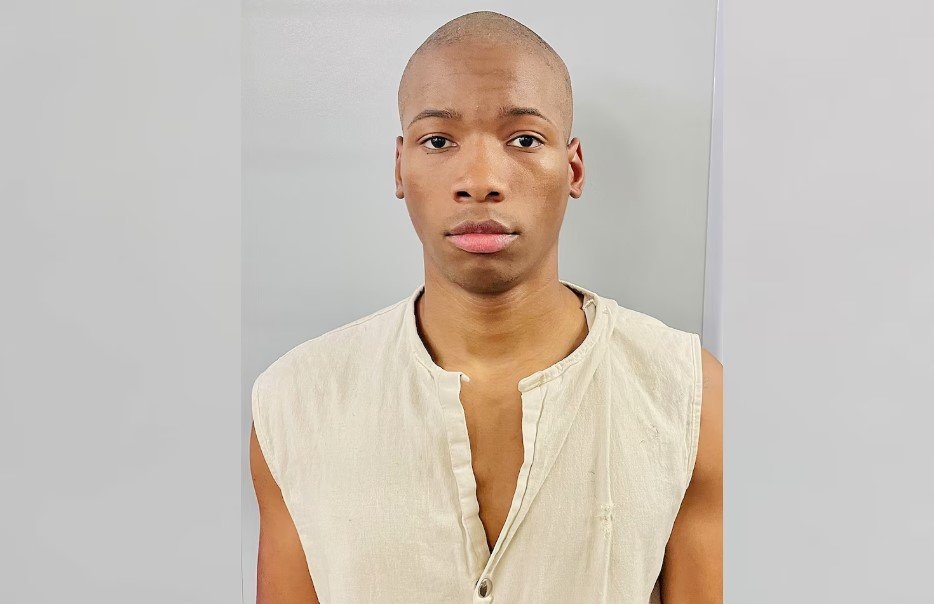
What began as an ordinary high school track meet in Texas ended in a tragedy that would capture national attention, divide public opinion, and leave two families forever changed.
In June 2026, a Collin County jury found Karmelo Anthony guilty of murder in the fatal stabbing of 17-year-old Austin Metcalf during a track meet in Frisco, Texas. After hearing testimony and reviewing evidence presented during the trial, jurors rejected Anthony’s self-defense claim and sentenced him to 35 years in prison.
The case quickly became one of the most discussed criminal trials in the country.
While the courtroom battle focused on evidence, witness testimony, and Texas law, public discussion expanded far beyond the facts of the case. Questions involving self-defense, youth violence, race, social media, fundraising campaigns, and media coverage all became part of the national conversation.
Now that a verdict has been reached, many people are still asking how a dispute between two teenagers escalated into a deadly encounter.
The Incident That Changed Everything
The fatal confrontation occurred during a high school track meet in April 2025.
According to testimony presented during the trial, students from multiple schools were gathered at the event when bad weather moved through the area. Athletes sought shelter beneath team tents positioned near the stadium seating. Witnesses testified that Karmelo Anthony was sitting beneath a tent designated for students from Memorial High School, where Austin Metcalf was a student.
Several witnesses said Metcalf and others asked Anthony to leave the area.
What happened next would become the central issue of the trial.
According to prosecutors, a verbal confrontation escalated into a physical encounter. Witnesses testified that Anthony warned Metcalf before pulling a knife and stabbing him in the chest. Prosecutors argued the act was intentional and unjustified.
The wound proved fatal.
Emergency responders attempted to save Metcalf, but he later died from his injuries. Medical testimony indicated the knife penetrated his chest and heart.
The Self-Defense Claim
From the beginning, Anthony’s legal team argued that he acted in self-defense.
Defense attorneys maintained that Anthony feared for his safety during the confrontation and reacted in what he believed was necessary to protect himself.
The defense emphasized the chaotic nature of the encounter and argued that the jury should consider Anthony’s state of mind during the incident. They urged jurors to view the stabbing through the lens of self-defense rather than murder.
Prosecutors strongly disagreed.
They argued that the evidence showed Anthony escalated a disagreement into deadly violence. According to prosecutors, the force used was neither reasonable nor justified under the circumstances. They described the stabbing as a senseless killing that stemmed from an argument that should never have become deadly.
Ultimately, jurors sided with the prosecution.
The Trial
The trial lasted several days and featured testimony from students, witnesses, law enforcement officers, and medical experts.
Witness accounts became a critical part of the proceedings because many of the people present were teenagers attending the track meet.
Jurors heard competing interpretations of the confrontation.
The defense attempted to establish that Anthony reasonably feared harm.
The prosecution focused on the decision to use a knife during a dispute that involved no deadly weapon on the other side.
After deliberating for less than three hours, the jury returned a guilty verdict on the murder charge. Jurors also rejected lesser alternatives that could have reduced Anthony’s criminal responsibility.
The verdict represented a decisive rejection of the self-defense argument.
The Sentence
Following the conviction, the trial moved into the punishment phase.
Anthony faced the possibility of a much longer prison sentence, potentially even life imprisonment under Texas law. Because he was a minor at the time of the offense, however, the death penalty was not legally available.
During sentencing, family members and supporters spoke on his behalf.
His mother pleaded for mercy and asked jurors to remember that her son still had a future worth saving. Defense attorneys argued that Anthony deserved an opportunity to eventually rebuild his life.
The jury ultimately sentenced him to 35 years in prison.
Under Texas law, he may become eligible for parole after serving a significant portion of that sentence.
A Family’s Grief
For the Metcalf family, the verdict closed one chapter but could never erase their loss.
Throughout the trial, family members spoke about Austin’s life, character, and future.
He was remembered as a student-athlete with goals, ambitions, and a close relationship with his family.
Particularly emotional were references to Austin’s twin brother, who lost someone he had shared his entire life with.
Family members described the lasting impact of the tragedy and the emotional burden they continue to carry every day.
For them, no sentence could truly replace what was taken.
A Nation Divided
What made this case different from many local criminal trials was the national attention it received.
Almost immediately after the incident, social media transformed the case into a broader political and cultural debate.
Some commentators focused on self-defense laws.
Others emphasized race.
Others discussed school safety and youth violence.
As often happens in high-profile cases, competing narratives emerged long before the trial concluded.
Supporters of Anthony argued that the public rushed to judgment.
Supporters of the Metcalf family argued that the evidence overwhelmingly supported a murder conviction.
The debate spread across television networks, podcasts, YouTube channels, and social media platforms.
The Role of Social Media
One of the most remarkable aspects of the case was the role played by social media.
Fundraising efforts for both families attracted widespread attention and generated hundreds of thousands of dollars in donations. The case became a magnet for political activists, influencers, and online commentators from across the ideological spectrum.
Law enforcement officials repeatedly urged the public to rely on verified information rather than rumors.
Despite those warnings, misinformation circulated widely throughout the investigation and trial.
The case became an example of how modern criminal proceedings can unfold simultaneously in courtrooms and online.
Lessons From the Tragedy
Regardless of political views, most observers agree on one thing:
A confrontation that should have ended with words instead ended with a funeral and a prison sentence.
Austin Metcalf lost his life.
Karmelo Anthony lost much of his future.
Two families experienced unimaginable pain.
What makes the case so heartbreaking is how quickly events unfolded.
A disagreement lasting only moments ultimately changed countless lives forever.
Final Thoughts
The Karmelo Anthony case became far more than a local criminal prosecution.
It evolved into a national story involving justice, accountability, self-defense, race, media narratives, and the influence of social media.
Yet beneath all the headlines lies a simple and tragic reality.
A teenager is dead.
Another teenager will spend decades in prison.
Two families will live with the consequences for the rest of their lives.
The jury has delivered its verdict.
But the broader debates surrounding the case are likely to continue long after the courtroom proceedings have ended.