
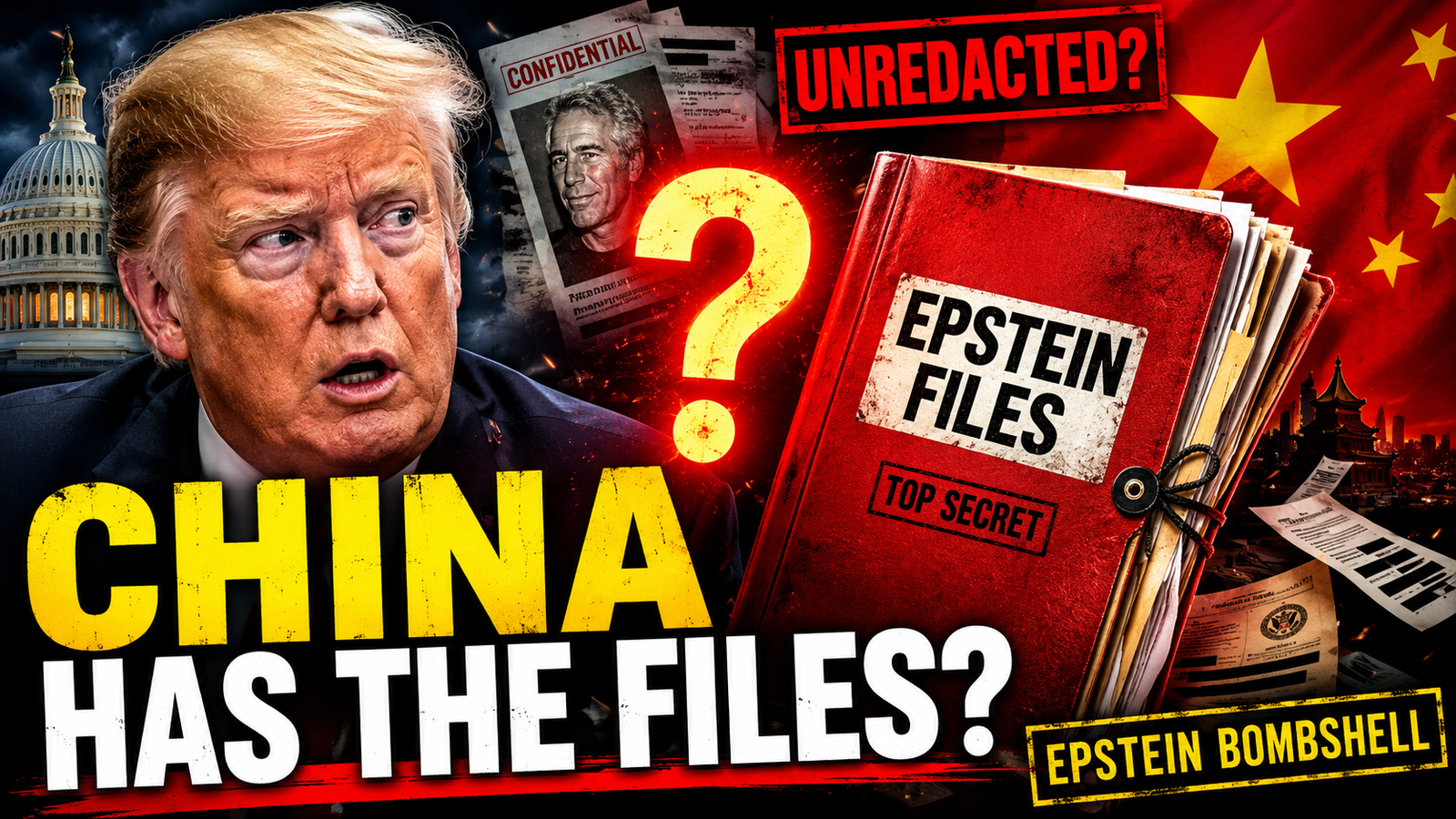
A controversial claim involving China and the Epstein files has ignited fresh global attention around one of the most sensitive political scandals in recent memory.
A Chinese commentator with advisory ties to Beijing suggested that China could potentially release the “complete unredacted Epstein files” in the future.
Although the statement was vague and not backed by evidence, it quickly circulated online and was interpreted by some as an indication that additional undisclosed materials may exist outside U.S. government control.
At the same time, the United States has already released a massive volume of Epstein-related material under a transparency law signed in late 2025, fueling ongoing political disputes, accusations of incomplete disclosure, and escalating geopolitical narrative competition.
What Was Actually Said by the Chinese Commentator
The claim originates from Victor Gao, a Chinese lawyer and political commentator who is frequently described as having advisory connections to Chinese government circles.
In public remarks, Gao did not explicitly state that China possesses Epstein-related investigative files. Instead, he used a broad philosophical statement:
“Eventually, everything needs to come out to the sun.”
This ambiguous phrasing was later interpreted by some online commentators and political accounts as implying that China might have access to additional Epstein-related information.
However, there is currently no verified evidence from mainstream media, intelligence sources, or official government statements that China holds any Epstein investigative archives or classified materials.
The distinction between interpretation and verified fact is central to understanding why this claim gained traction so quickly.
How the Claim Spread Online
Once the statement was clipped and shared on social platforms, it rapidly evolved beyond its original context.
Several factors contributed to its viral spread:
- Existing global fascination with Epstein-related investigations
- Ongoing distrust in government transparency across multiple countries
- The ambiguous nature of the original quote
- Increased politicization of leaked or partially released documents
In digital information ecosystems, vague statements tied to high-profile controversies often escalate into perceived revelations, even without supporting evidence.
What Is Confirmed: The Epstein Files Transparency Act
Unlike the China-related claim, there are verified and documented developments surrounding Epstein-related disclosures in the United States.
In November 2025, President Donald Trump signed the Epstein Files Transparency Act, mandating the release of federal documents related to the Epstein investigation.
By January 30, 2026, the U.S. Department of Justice had released a substantial volume of material, including:
- Over 3 million pages of documents
- Approximately 2,000 videos
- Around 180,000 images
This release represented one of the largest public disclosures of investigative material related to Epstein to date.
However, the release immediately raised further questions about whether the full archive had actually been disclosed.
Debate Over Missing or Withheld Documents
Despite the scale of the release, controversy has continued within U.S. political circles.
Representative Thomas Massie has been one of the most vocal critics of the process. He has publicly alleged that additional materials remain withheld and that full compliance with the law has not been achieved.
Massie has accused Acting Attorney General Todd Blanche of failing to fully release all required documents under the transparency mandate.
He has also publicly named individuals he believes are connected to Epstein-related financial or social networks, including:
- Leon Black
- Jes Staley
- Leslie Wexner
Massie has further pledged to continue pushing for additional disclosures and stated his intention to release further information before leaving Congress in January 2027.
These claims remain politically charged and have not resulted in any final judicial determinations.
China’s Role: Amplification vs. Possession
While the claim suggests China may possess undisclosed Epstein files, analysts emphasize a different reality: amplification of existing information rather than possession of new material.
Following the U.S. document releases, Chinese state-affiliated media reportedly highlighted specific names and excerpts already present in publicly available files.
Experts describe this as part of a broader information strategy often used in geopolitical competition:
- Amplifying sensitive material from rival nations
- Framing disclosures in politically favorable ways
- Increasing internal pressure and external distrust
However, this practice does not indicate access to non-public or classified U.S. investigative archives.
Information Warfare and Global Narrative Competition
The Epstein files controversy has increasingly become part of a larger global information environment where narratives compete across borders.
Key dynamics include:
- High public sensitivity around Epstein-related allegations
- Competing political interpretations within the U.S.
- Rapid viral spread of unverified claims online
- Strategic amplification of foreign media coverage
In this context, even vague statements can be reinterpreted as geopolitical signals, regardless of intent.
Why the Story Resonates Globally
The reason this claim gained such attention is not solely because of its content, but because of the environment in which it emerged.
Several underlying factors contribute:
- The Epstein case remains unresolved in public perception
- Large-scale document releases create expectations of hidden information
- Distrust in institutions increases receptivity to alternative narratives
- International actors often become part of U.S. political discourse
As a result, claims involving foreign governments and sensitive U.S. investigations tend to escalate quickly, even when unverified.
Key Facts vs. Unverified Claims
To separate confirmed information from speculation:
Confirmed
- The U.S. released millions of Epstein-related documents under a transparency law signed in 2025
- Chinese media have referenced publicly released Epstein materials
- U.S. lawmakers continue to dispute whether full disclosure has occurred
Unverified
- Claims that China possesses the complete unredacted Epstein files
- Assertions that foreign governments hold undisclosed Epstein archives
Interpretive/Political
- Allegations of withheld U.S. documents
- Framing of document releases as incomplete or selective
- Geopolitical interpretations of media amplification
Conclusion
The suggestion that China may release Epstein files has added a new international dimension to an already complex and highly sensitive investigation.
However, current evidence does not support the claim that China possesses additional Epstein investigative materials. Instead, the situation reflects a combination of ambiguous public statements, ongoing U.S. transparency disputes, and global amplification of politically sensitive information.
As the Epstein files continue to be debated, released, and contested, the story is increasingly less about a single dataset and more about how information itself is used, interpreted, and contested in a global political environment.