
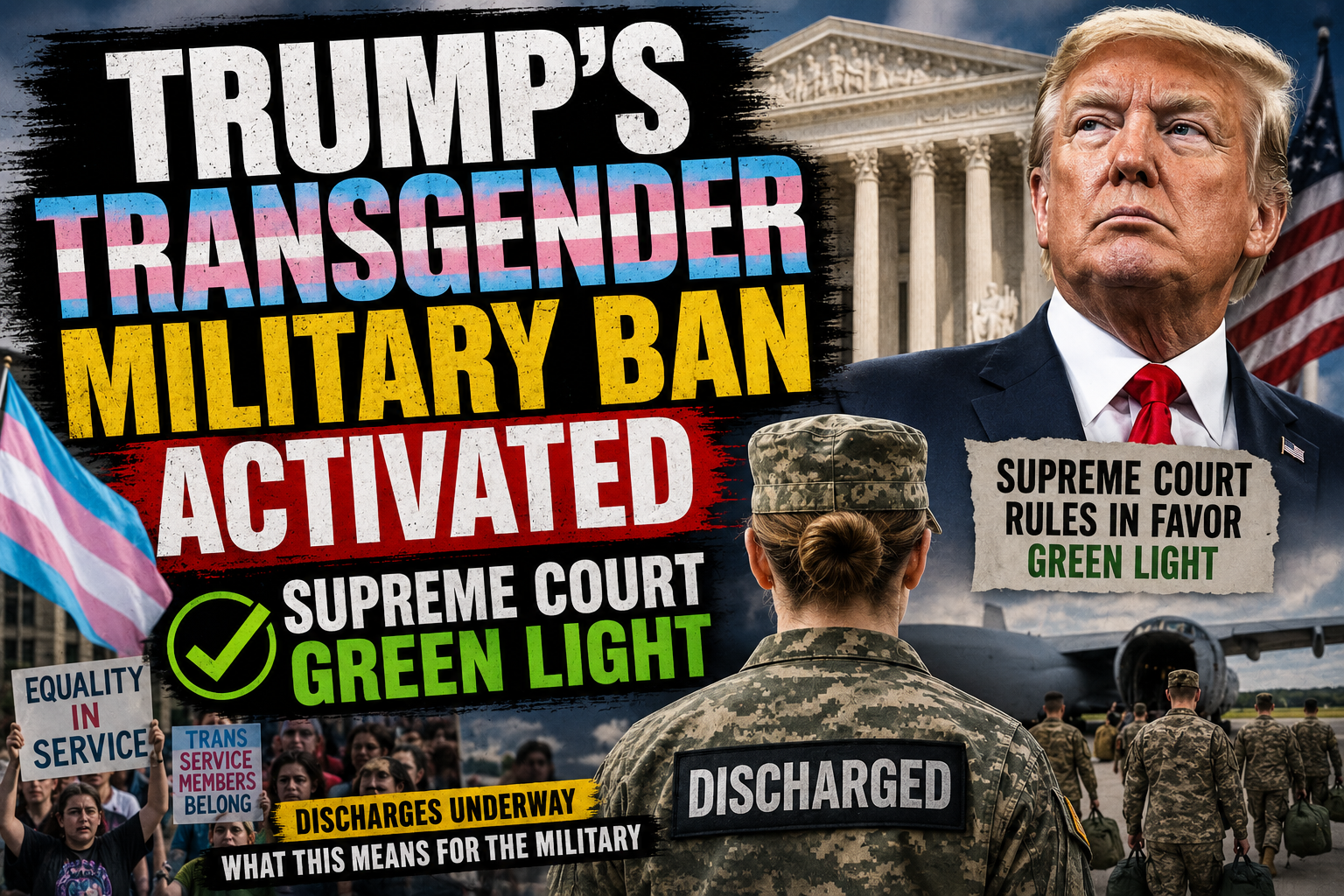
The United States military has begun formally discharging transgender service members following the enforcement of a policy linked to the Trump administration, after the Supreme Court allowed the ban to proceed in May 2025.
By June 6, 2025, active-duty separations were already underway across multiple branches of the armed forces. The policy, which restricts service eligibility for individuals diagnosed with gender dysphoria or those who have undergone gender-affirming treatment, has quickly become one of the most controversial military and civil rights developments of the year.
As the implementation expands into reserve forces in July 2025, the decision continues to fuel legal battles, political debate, and deep divisions over military readiness, equality, and medical standards in the armed forces.
How the Policy Reached the Supreme Court
The current enforcement stems from a long-running legal and political dispute over transgender military service.
The Trump-era policy originally introduced restrictions on transgender individuals serving openly in the military, arguing that certain medical conditions and treatments could impact deployability, readiness, and operational costs.
Although parts of the policy were challenged and paused in earlier years, it was never fully settled in a final constitutional ruling.
That changed on May 6, 2025, when the Supreme Court issued a decision allowing the federal government to enforce the policy while lower court litigation continues.
This ruling effectively removed the final barrier preventing the Department of Defense from resuming discharges under the existing framework.
What the Policy Specifically Prohibits
Under the enforcement guidelines now being applied, the military restricts service for:
- Individuals diagnosed with gender dysphoria
- Service members undergoing or requiring gender-affirming medical treatment
- Personnel who have undergone certain transition-related procedures
- Applicants whose medical status requires ongoing specialized hormone therapy
The Department of Defense has framed these restrictions as medical readiness standards rather than identity-based exclusions. However, critics argue that the policy effectively targets transgender individuals as a group.
How the Discharge Process Is Being Carried Out
Beginning June 6, 2025, the military initiated a structured separation process across active-duty units.
Phase 1: Identification and Medical Review
Service members flagged under updated medical standards are reviewed through existing personnel and medical evaluation systems.
Phase 2: Administrative Separation Boards
Affected personnel are evaluated on a case-by-case basis. These boards determine whether continued service is compatible with updated policy requirements.
Phase 3: Reserve Component Discharges (Starting July 2025)
National Guard and reserve forces are scheduled to begin similar separation procedures, expanding the scope of the policy beyond active-duty personnel.
Officials have emphasized that these are administrative separations, not punitive discharges. However, the consequences include loss of career progression, benefits, and military status.
Scale and Impact on the Military
While official numbers vary and continue to develop, the policy is expected to affect hundreds to potentially thousands of service members across all branches.
Key operational concerns include:
- Loss of trained and specialized personnel
- Disruption in unit cohesion during transition periods
- Administrative burden on military medical and HR systems
- Potential impacts on recruitment and retention
Some defense analysts warn that removing experienced personnel during ongoing global commitments could create short-term readiness gaps in specialized units.
Arguments Supporting the Policy
Supporters of the enforcement, including some defense policymakers and political figures, argue the decision is based on maintaining strict military readiness standards.
Common arguments include:
Medical Deployability
Military service often requires rapid deployment under harsh and unpredictable conditions. Supporters argue that ongoing medical treatment requirements may interfere with deployability.
Cost of Care
Gender-affirming medical treatments and long-term hormone therapy are cited as contributing to increased healthcare costs within the military system.
Uniform Standards
Proponents emphasize that the military has historically excluded individuals based on physical or medical conditions that affect performance, arguing this policy is consistent with that tradition.
Operational Cohesion
Some supporters claim that uniform medical standards reduce administrative complexity and maintain unit cohesion in high-pressure environments.
Criticism and Opposition
Opposition to the policy has been strong from civil rights groups, legal advocates, and many military personnel.
Critics argue:
Discrimination Concerns
The policy is viewed by many as targeting a specific identity group rather than applying neutral performance-based standards.
Loss of Skilled Personnel
Opponents highlight that transgender service members include experienced pilots, engineers, medical personnel, and combat-trained troops whose removal could weaken capability.
Legal and Constitutional Questions
Ongoing lawsuits argue the policy may violate equal protection principles and unfairly restrict service based on identity and medical classification.
Mental Health and Morale
Advocacy groups also raise concerns about the psychological impact on discharged personnel and remaining transgender service members.
Political and Public Reaction
The policy has reignited a broader political debate in the United States over military inclusion and civil rights.
Supporters of former President Donald Trump and the policy frame it as a necessary correction to maintain discipline and readiness within the armed forces.
Opponents see it as part of a broader rollback of protections for transgender individuals in public institutions.
The issue has become highly polarized, reflecting wider national divisions on gender identity policy, healthcare access, and institutional reform.
Ongoing Legal Challenges
Despite enforcement beginning, the policy has not reached a final legal resolution.
Current legal developments include:
- Active cases in federal district and appellate courts
- Requests for injunctions to halt further discharges
- Constitutional challenges regarding equal protection and due process
- Potential for Supreme Court reconsideration in the future
Legal experts note that the Supreme Court ruling in 2025 primarily addressed enforcement timing, not a final judgment on constitutionality.
What Happens Next
The timeline moving forward includes several key developments:
- June–July 2025: Continued active-duty and reserve separations
- Late 2025: Expanded legal hearings in federal courts
- Policy Review Period: Potential adjustments depending on court rulings or political administration changes
- Long-Term Outlook: Possible permanent establishment or reversal depending on future legal outcomes
The situation remains fluid, with both policy implementation and litigation progressing simultaneously.
Conclusion
The enforcement of the Trump-linked transgender military ban following the Supreme Court ruling marks a major turning point in U.S. defense and civil rights policy.
While supporters argue the policy strengthens military readiness and standardization, critics see it as a significant setback for inclusion and equal opportunity within the armed forces.
As discharges continue and legal battles intensify, the final outcome remains uncertain, but the impact on military personnel, policy direction, and national debate is already profound.