
Just when many Americans thought the COVID era was finally fading into history, one statement has reignited one of the most divisive debates in modern politics.
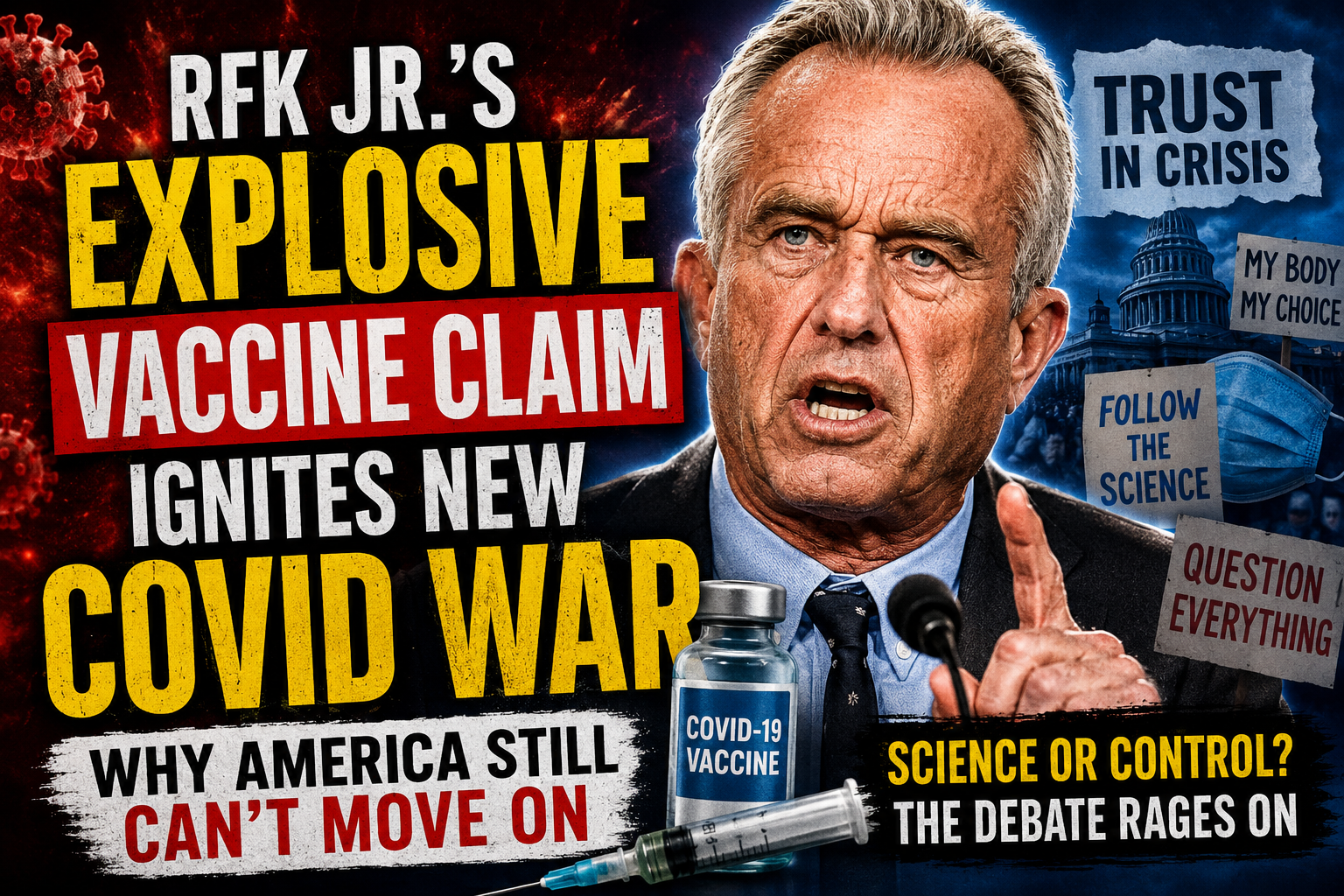
Robert F. Kennedy Jr. has once again sparked controversy by declaring that the COVID vaccine is “the deadliest vaccine ever made.”
The remark immediately triggered backlash from Democratic lawmakers, public health advocates, and medical experts, many of whom argue that COVID vaccines helped save millions of lives during one of the worst public health emergencies in modern history.
Yet Kennedy isn’t backing away.
Instead, he appears determined to continue challenging what he views as the public health establishment.
The result is a political firestorm that reveals a deeper truth:
America still hasn’t settled the arguments that defined the pandemic years.
The COVID Debate Refuses to Die
More than six years after the world first entered lockdowns, COVID remains one of the most emotionally charged topics in American life.
Vaccines.
Mask mandates.
School closures.
Government restrictions.
Employer mandates.
Travel requirements.
Every one of those issues left lasting scars on the political landscape.
For some Americans, the vaccines represented scientific achievement and a path back to normal life.
For others, they became symbols of government overreach and institutional pressure.
That divide never fully disappeared.
Now it is resurfacing once again.
Why RFK Jr. Remains So Polarizing
Kennedy has built much of his public profile around questioning government institutions and challenging official narratives.
His supporters view him as someone willing to ask uncomfortable questions.
Critics accuse him of promoting misinformation and undermining confidence in public health programs.
The controversy surrounding his latest comments follows the same pattern.
Supporters argue that concerns about vaccine safety deserve open discussion.
Opponents counter that extraordinary claims require extraordinary evidence.
The disagreement extends far beyond Kennedy himself.
It reflects a broader crisis of trust.
The Trust Problem
One of the biggest stories to emerge from the pandemic wasn’t medical.
It was institutional.
Trust in government agencies declined, and trust in major media organizations declined.
Trust in public health authorities declined.
Many Americans began questioning whether officials were always transparent about what they knew and when they knew it.
Others continue to place significant confidence in the scientific and medical communities.
That gap in trust may be one of the pandemic’s most enduring legacies.
And it helps explain why vaccine debates remain so intense years later.
Democrats Push Back
Democratic leaders and vaccine advocates have strongly rejected Kennedy’s characterization of COVID vaccines.
They point to studies showing vaccines reduced severe illness, hospitalization rates, and deaths during critical phases of the pandemic.
Many health experts argue that vaccination campaigns played a major role in preventing healthcare systems from becoming overwhelmed.
From their perspective, claims describing the vaccines as uniquely deadly are not supported by the broader body of scientific evidence.
As a result, calls for Kennedy to stop repeating such statements have grown louder.
Why Kennedy Isn’t Retreating
Historically, criticism has rarely caused Kennedy to moderate his position.
If anything, public opposition often appears to strengthen his resolve.
His supporters frequently argue that attempts to silence controversial viewpoints only increase public curiosity.
That dynamic has become increasingly common in modern politics.
Attempts to suppress debate often generate even more attention.
Whether that ultimately helps or hurts Kennedy politically remains an open question.
The Bigger Fight Isn’t About Vaccines
At first glance, this appears to be a disagreement about medicine.
In reality, it may be a disagreement about authority.
Who should Americans trust?
Government agencies?
Medical institutions?
Independent researchers?
Political leaders?
Social media influencers?
The answer varies dramatically depending on whom you ask.
The vaccine argument has become a proxy for a much larger conversation about expertise, accountability, and public confidence.
Social Media Is Fueling The Divide
Platforms like Facebook, X, TikTok, and YouTube have transformed how information spreads.
Supporters and critics now live in entirely different information ecosystems.
Each side consumes different sources, sees different evidence, and believes the other is ignoring important facts.
As a result, consensus becomes increasingly difficult.
The debate grows louder while common ground becomes harder to find.
Why This Issue Still Matters
Some people wonder why COVID remains such a political flashpoint years after the emergency phase ended.
The answer is simple.
The pandemic changed lives.
Businesses closed.
Jobs disappeared.
Schools shut down.
Families lost loved ones.
Government policies affected nearly every American.
When experiences are that significant, disagreements don’t disappear overnight.
They continue shaping politics long after the immediate crisis ends.
What Happens Next?
Don’t expect this debate to fade anytime soon.
As long as public trust remains divided, arguments over COVID policies and vaccines will continue resurfacing.
Kennedy’s latest comments may be controversial.
But the reaction demonstrates something important.
The country is still debating the lessons of the pandemic.
And there is little sign that consensus is coming soon.
Final Thoughts
The battle over COVID vaccines is no longer just about science.
It has evolved into a debate about trust, authority, freedom, and government power.
RFK Jr.’s comments have once again exposed those fault lines.
Supporters see a figure challenging powerful institutions.
Critics see someone promoting dangerous claims.
Regardless of where people stand, one thing is undeniable:
The COVID debate is far from over.
And every time it seems to be fading, it finds a way back into the national conversation.