
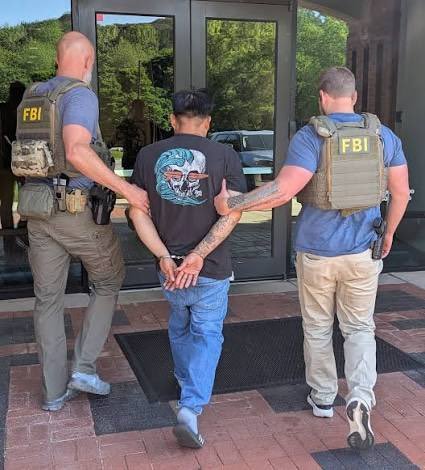
A groundbreaking undercover operation is shaking the crypto industry
Critics have long accused the crypto market of hidden manipulation, fake trading volumes, and coordinated price inflation schemes.
But in one of the most aggressive enforcement actions ever taken in the digital asset space, U.S. authorities flipped the script.
Instead of investigating from the outside, the FBI and Department of Justice went undercover by creating their own cryptocurrency.
The result was a fake token that attracted bad actors, exposed wash trading networks, and gathered direct evidence of market manipulation in real time.
The Fake Token That Started It All
The operators centered their operation around NexFundAI, a deliberately created ERC-20 token they deployed on Ethereum.
Unlike typical crypto projects, NexFundAI had:
- No real utility
- No development roadmap
- No legitimate investment purpose
But it had something more powerful than most projects in the market: law enforcement control behind the scenes.
The FBI designed it to look like a standard Web3 project, complete with branding and messaging that mimicked real-world crypto startups. The goal was simple: make it believable enough that market manipulators would engage with it.
The Trap: Market Makers Offered Fake Volume Schemes
Once the token was live, undercover agents posed as project founders and approached crypto market-making firms offering a straightforward proposition:
Inflate trading volume and simulate organic market activity.
This is where the investigation turned into a live demonstration of how the industry’s darker side operates.
Several firms allegedly agreed to provide wash trading services—techniques used to artificially inflate trading volume and create the illusion of demand.
These schemes typically involve:
- Coordinated buy/sell transactions between controlled wallets
- Bot-driven trading activity
- Circular liquidity loops that generate fake market depth
In essence, the price chart becomes a performance, not a reflection of real demand.
How Wash Trading Actually Works in Crypto
Market manipulation in crypto often relies on a simple psychological trick: volume equals legitimacy.
When traders see:
- High trading volume
- Rapid price movement
- Consistent upward momentum
They assume a project is gaining traction and rush in.
But often, that activity is manufactured.
Bots or coordinated trading desks can simulate this behavior at low cost, making a token appear far more active than it truly is. This creates what traders call “exit liquidity”—real buyers entering while insiders cash out.
The Bigger Investigation Picture
According to official enforcement actions, the FBI operation led to multiple arrests across different jurisdictions involving individuals and firms accused of market manipulation and fraudulent trading practices.
The focus of the case was not just one token, but an entire ecosystem of services that enable artificial market activity:
- Crypto “market-making” firms
- Bot trading networks
- Coordinated pump-and-dump groups
The investigation revealed how easily trading metrics can be distorted in largely unregulated markets.
Why This Matters for Crypto Investors
The most important takeaway is not the sting itself; it’s what it confirms about the market structure.
Crypto trading data is often assumed to be transparent and organic. In reality:
- Volume can be artificially inflated
- Price action can be engineered
- Liquidity can be misleading
For retail investors, this creates a dangerous information asymmetry. Charts that look bullish may not reflect real demand at all.
The Industry Reaction: Trust Issues Deepen
The operation has intensified debates about regulation, transparency, and the role of market makers in digital asset ecosystems.
Critics argue that:
- Wash trading is still too easy to execute
- Exchanges may not sufficiently verify trading activity
- Retail investors are left exposed to manipulated signals
Supporters of stricter oversight believe operations like this are necessary to clean up the industry and restore trust.
Final Thoughts
The FBI’s undercover crypto operation represents a turning point in digital asset enforcement. Whether one views it as a necessary crackdown or a controversial intervention, it highlights a critical truth:
In crypto markets, appearances can be engineered.
And when trading activity can be manufactured, investors are no longer just analyzing markets—they’re interpreting carefully constructed illusions.