
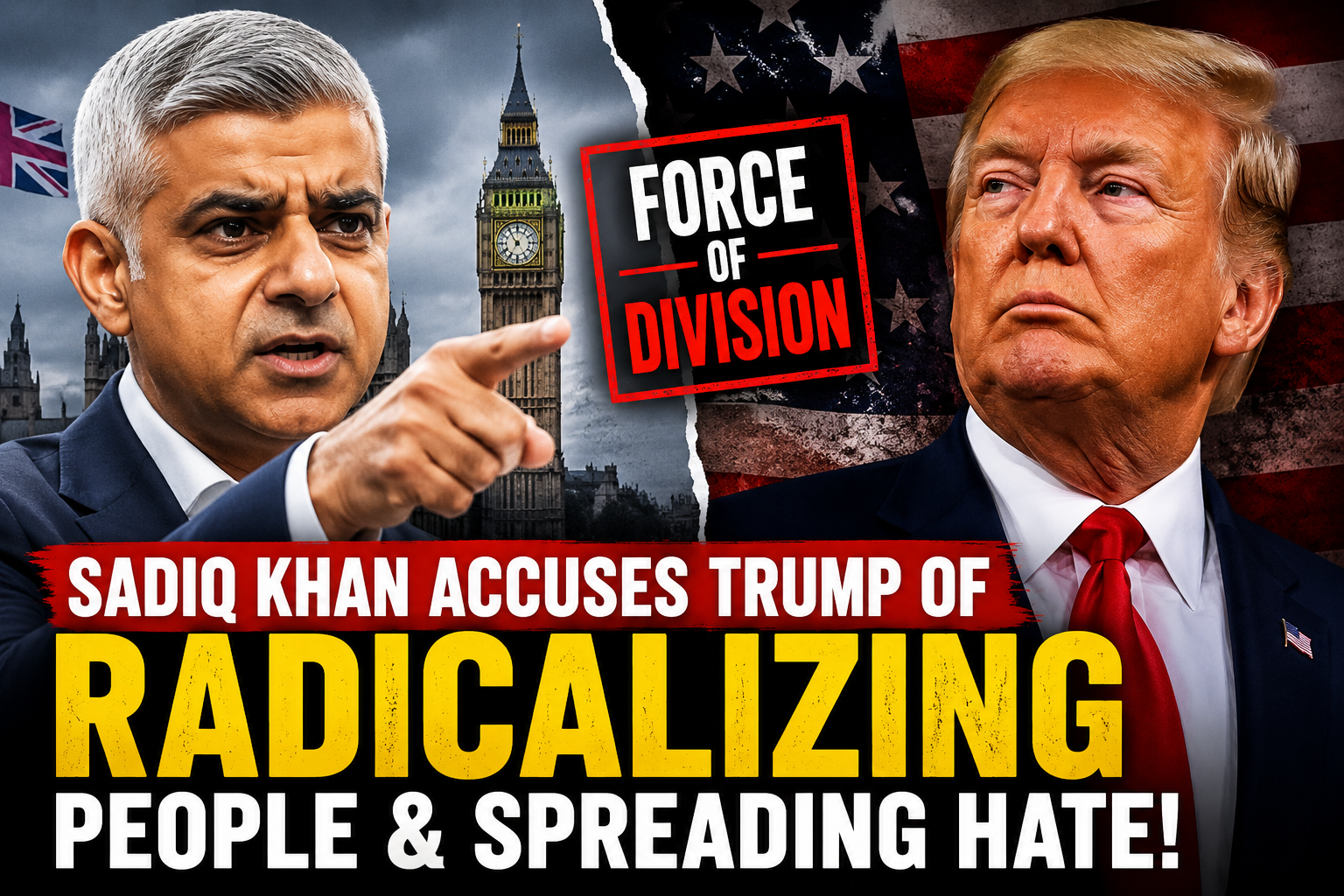
In a statement that has quickly gained international attention, London Mayor Sadiq Khan has launched a sharp criticism of former U.S. President Donald Trump, accusing him of contributing to political and social polarization through his public rhetoric.
Khan’s remarks have reignited longstanding debates about the influence of high-profile political figures on public discourse, especially in an era defined by rising global tensions and ideological fragmentation.
Khan’s Accusations: “More Than Just Political Speech”
Speaking over the weekend, Sadiq Khan described Donald Trump not simply as a political leader, but as what he called a “force of division.”
According to Khan, Trump’s language and public messaging have gone beyond typical political disagreement and have instead contributed to shaping harmful attitudes in society.
He specifically alleged that Trump’s rhetoric has included elements that can be interpreted as:
- Racist undertones
- Misogynistic framing
- Islamophobic messaging
Khan argued that such rhetoric does not exist in isolation, but can influence broader public attitudes and behavior over time.
“Radicalizing Influence” Allegation
One of the most controversial parts of Khan’s statement was his suggestion that Trump’s rhetoric has had a “radicalizing” effect on individuals.
While Khan did not provide specific examples in his remarks, the implication was that repeated exposure to inflammatory political messaging can intensify existing divisions within society and encourage more extreme viewpoints.
This claim is likely to fuel further debate, particularly among political commentators and Trump supporters who strongly reject such characterizations.
Broader Concerns About Political Rhetoric
Khan’s comments come amid ongoing global discussions about the role of political leaders in shaping public sentiment.
Supporters of stricter standards for political speech argue that influential figures carry responsibility for the tone and consequences of their messaging.
They warn that divisive rhetoric can:
- Deepen social and cultural divides
- Increase distrust in institutions
- Normalize hostility toward minority communities
Critics, however, argue that such interpretations risk blurring the line between political disagreement and censorship of opinion.
Reaction and Political Implications
Unsurprisingly, Khan’s remarks have sparked renewed debate online, with strong reactions emerging from both supporters and critics of Donald Trump.
While some agree with Khan’s assessment and point to Trump’s history of controversial statements, others see the comments as politically motivated and overly accusatory.
The discussion reflects a broader global trend: the increasing tension between free political expression and concerns over the social impact of inflammatory rhetoric.
Conclusion: A Debate Far From Over
As political divisions continue to widen across many democracies, Sadiq Khan’s comments add another layer to an already heated global conversation.
Whether viewed as a justified warning or an exaggerated claim, his statement ensures that Donald Trump’s influence on political discourse remains a topic of intense scrutiny and debate.
One thing is clear: the intersection of political leadership, media influence, and public perception is becoming more contested than ever.