
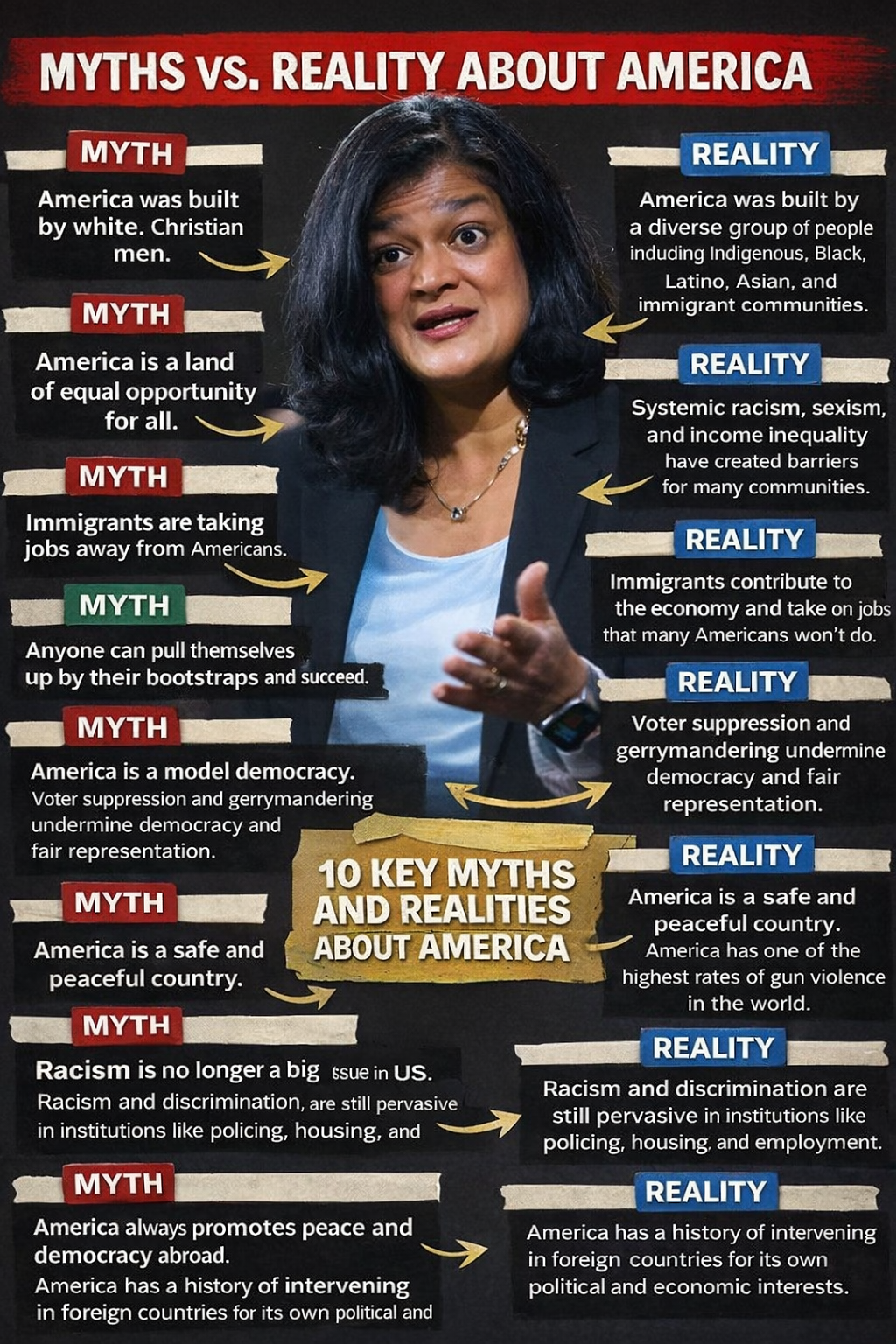
For generations, the story of who built America has often been told in a simplified, polished way one that highlights a few familiar names while overlooking the countless hands that truly shaped the nation.
The reality, however, is far more complex, diverse, and powerful than the myth.
America was not built by one group, one culture, or one vision. It was built by a mosaic of people immigrants, enslaved individuals, laborers, dreamers, and survivors each contributing in ways that history books sometimes fail to fully capture.
Understanding this truth doesn’t diminish America’s greatness; it deepens it.
Let’s break down the myth versus the reality by exploring 10 key myths vs reality about who really built America.
1. Myth: America Was Built Mainly by the Founding Fathers
Reality: Millions of Ordinary People Did the Real Work
The Founding Fathers played a critical role in shaping the nation’s political framework, but they didn’t physically build the country. Roads, cities, farms, and industries were developed by everyday people many of whom remain unnamed in history.
From farmers clearing land to laborers constructing railroads and immigrants working long hours in factories, the physical and economic foundation of America came from collective effort, not just leadership.
2. Myth: Only Europeans Built Early America
Reality: Indigenous Peoples and Africans Were Foundational
Before European settlers arrived, Indigenous peoples had already developed sophisticated societies, trade systems, and agricultural techniques. Their knowledge helped early settlers survive in unfamiliar environments.
At the same time, enslaved Africans were forced into labor that became the backbone of early American wealth. From agriculture to infrastructure, their contributions were immense yet often minimized or ignored in mainstream narratives.
3. Myth: Slavery Was a Side Chapter
Reality: It Was Central to America’s Economic Growth
Slavery wasn’t just a dark chapter it was deeply embedded in the nation’s economic rise. Crops like cotton, tobacco, and sugar, produced through enslaved labor, fueled both domestic and global markets.
The wealth generated from this system helped finance industries, banks, and institutions that still exist today. Ignoring this reality distorts the true story of how America developed economically.
4. Myth: Immigrants Came Later and Played Minor Roles
Reality: Immigrants Have Always Been Builders of America
From the earliest days, immigrants have been central to America’s growth. Irish and Chinese workers built railroads. Italians helped construct cities. Jewish immigrants contributed to commerce and innovation.
Later waves including Indians, Latinos, and Africans have driven sectors like technology, healthcare, agriculture, and entrepreneurship. America’s development has always depended on immigrant labor and ideas.
5. Myth: Only Men Built America
Reality: Women Were Essential Builders Too
Women’s contributions have often been overlooked, yet they played vital roles in shaping the nation. From managing households and farms to working in factories during wartime, women kept the country running.
Women of all backgrounds especially Black, Indigenous, and immigrant women have contributed as laborers, educators, caregivers, and activists. Their impact is deeply woven into America’s story.
6. Myth: America Was Built Only Through Freedom and Opportunity
Reality: It Was Also Built Through Struggle and Inequality
While America is often described as the land of opportunity, that opportunity has not been equally available to everyone. Many of the people who built the nation did so under harsh conditions low wages, discrimination, or even forced labor.
Understanding this struggle doesn’t weaken the American story; it adds depth and honesty. It shows that progress often came through resilience and resistance, not just opportunity.
7. Myth: Latino Contributions Are Recent
Reality: Latino Influence Dates Back Centuries
Latino communities have been part of American history long before the modern era. In regions like the Southwest, Latino culture, labor, and traditions have shaped local economies and identities for generations.
Today, Latinos continue to play a major role in agriculture, construction, business, and culture. Their contributions are not new they are deeply rooted in the nation’s history.
8. Myth: African Contributions Ended After Slavery
Reality: African Americans Continued to Build and Innovate
After slavery, African Americans continued to shape the nation despite facing systemic barriers. They contributed to music, science, education, civil rights, and industry.
From building communities during segregation to leading movements for equality, their influence has been transformative. The idea that their contributions ended with slavery is not only false it erases centuries of progress and achievement.
9. Myth: Somali, Indian, and African Immigrants Are New and Marginal
Reality: They Are Key Players in Modern America
In recent decades, immigrants from Somalia, India, and various African nations have become vital contributors to American society.
Indian professionals have played major roles in technology and medicine. Somali communities have strengthened local economies and cultural diversity. African immigrants have made strides in education, entrepreneurship, and public service.
These communities are not on the sidelines they are actively shaping modern America in meaningful ways.
10. Myth: America Was Built by a Single Identity
Reality: America Was Built by Diversity
Perhaps the biggest myth of all is that America was built by one type of person. In reality, its strength comes from diversity different cultures, languages, skills, and perspectives coming together.
This diversity has driven innovation, creativity, and resilience. It has allowed America to adapt, grow, and remain influential on the global stage.
Ways diversity has driven innovation, creativity and resilience:
1. Different Perspectives Lead to Better Ideas
People from diverse backgrounds see the world differently. These varied viewpoints help teams approach problems from multiple angles, often leading to more innovative and well-rounded solutions.
2. Challenging Assumptions Sparks Creativity
Homogeneous groups tend to think alike, which can limit creativity. Diversity introduces healthy disagreement and questioning, forcing people to rethink assumptions and come up with fresh ideas.
3. Broader Skill Sets Improve Problem-Solving
A diverse group brings a wider range of experiences, skills, and knowledge. This combination makes it easier to tackle complex challenges and find solutions that a single perspective might miss.
4. Cultural Diversity Inspires New Concepts
Exposure to different cultures introduces new traditions, practices, and ways of thinking. These influences often inspire unique products, services, and creative expressions.
5. Diversity Encourages Adaptability
Working with people who think differently teaches flexibility. Teams become better at adjusting to change, which is essential in fast-moving industries and uncertain environments.
6. Better Decision-Making
Research shows that diverse teams tend to make better decisions because they consider more factors and avoid “groupthink.” This leads to smarter, more effective outcomes.
7. Increased Innovation Through Collaboration
When people with different ideas collaborate, they can combine insights in unexpected ways. This often results in breakthrough innovations that wouldn’t happen in a uniform group.
8. Greater Empathy and Understanding
Diversity helps individuals understand different viewpoints and experiences. This empathy improves teamwork, communication, and the ability to create solutions that work for a wider audience.
9. Resilience Through Multiple Viewpoints
Diverse teams are more resilient because they can draw from a wider pool of experiences during challenges. This helps them navigate crises and bounce back stronger.
10. Access to Wider Markets and Audiences
A diverse group is better equipped to understand and serve different communities. This leads to products and ideas that resonate with a broader audience, increasing impact and success.
11. Encourages Continuous Learning
Diversity exposes people to new ideas and perspectives, creating an environment of constant learning and growth. This fuels both personal development and organizational innovation.
12. Reduces Blind Spots
When everyone thinks the same way, important details can be overlooked. Diversity helps identify risks, gaps, and opportunities that might otherwise go unnoticed.
Final Thoughts: Rewriting the Narrative
So, who really built America?
Not just the famous names in textbooks. Not just one race, culture, or group. America was built by Indigenous peoples, enslaved Africans, immigrants from every corner of the world, and generations of workers men and women who labored, sacrificed, and dreamed.
The myth simplifies the story. The reality tells the truth.
And the truth is this: America is a product of shared effort, complex history, and diverse contributions. Recognizing this doesn’t divide the nation it unites it by honoring everyone who played a role in its creation.
If we want to truly understand America, we must be willing to look beyond the myths and embrace the full, complicated, and inspiring reality.
Because only then can we appreciate not just where the country came from—but where it’s going.