
IAUE School Fees – For every student preparing to study at Ignatius Ajuru University of Education (IAUE), understanding the financial requirements is one of the most important steps before resumption.
The institution, located in Rumuolumeni, Rivers State, has officially released the comprehensive school fees structure for the 2025/2026 academic session. This announcement affects both new entrants and returning undergraduates, whether they are indigenes of the state or non-indigenes.
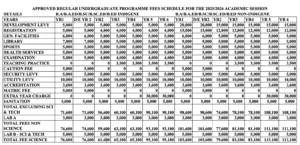
The newly approved structure is detailed and covers every level of study. Instead of simply publishing flat figures, the university has broken down the charges into categories so that students and parents can clearly understand what they are paying for and why.
General Overview of the IAUE School Fees
Unlike in many institutions where fees appear as one bulk amount, IAUE provides a transparent breakdown that reflects the realities of running a modern university. The schedule distinguishes between indigenes and non-indigenes, with indigenes paying relatively lower fees.
This is consistent with state-supported policies designed to make education more affordable for local students. Fresh undergraduates, direct entry candidates, and continuing students at higher levels will all find that their fees vary.
Students in science and technology-related fields pay slightly more compared to those in non-science programmes due to the cost of laboratories, materials, and practical sessions.
What the IAUE School Fees Cover
One common misunderstanding among students is assuming that tuition is just about lectures. At IAUE, fees are structured to cover both academic and non-academic needs. Every kobo goes into creating an enabling learning environment.
The charges include registration fees, development levies, library subscriptions, sports contributions, health services, examinations, teaching practice (for education students), and several other vital components.
Security, sanitation, accreditation, and utility charges are also included to ensure smooth daily operations across the campus. This ensures that students don’t just pay for classes but also for facilities that make their stay in the university conducive and safe.
First-Year and Direct Entry Students
For students beginning their academic journey in the 100 level, or those entering through direct entry at the 200 level, the fees are slightly higher. This is because of certain one-off payments such as matriculation fees, caution deposits, and higher registration costs. These additional charges are specific to new entrants and are not repeated in subsequent years.
This category of students also contributes more to the development levy, which goes directly into infrastructural expansion and maintenance across the university.
Fees for Returning Students
From the 200 level and above, the fees reduce a bit since new-entry charges no longer apply. At this stage, students only pay for recurring needs such as library access, examination fees, utilities, health services, sports, and sanitation.
However, the differences between science-based and non-science programmes remain constant because of laboratory usage and maintenance. Students in technology or laboratory-intensive fields continue to pay higher rates than their colleagues in other departments.
300 to 600 Level Progression
As students progress into higher levels like 300, 400, 500, and 600, their school fees reflect additional academic responsibilities. At these stages, education students are charged for teaching practice exercises, while others may have costs tied to projects, industrial training, or specialised fieldwork.
For final-year students, the fees also prepare them for graduation requirements, clearance procedures, and accreditation processes. In cases where students extend beyond the official duration of their programme, an extra year levy applies.
The Indigene vs Non-Indigene Policy
IAUE distinguishes between Rivers State indigenes and students from other states. The difference is significant across all levels, with non-indigenes paying higher tuition. For example, while an indigene may pay around ₦71,600 in their first year, a non-indigene in the same programme will pay close to ₦98,600.
This policy is not unique to IAUE; it is common across most state universities in Nigeria. The idea is to make education more affordable for residents whose taxes already contribute to the funding of the university.
Why Each Charge Matters
Looking at the long list of fees, it is natural for students to feel overwhelmed. But each charge has a clear purpose:
- Security levy: Ensures that the campus remains safe and properly guarded.
- Sanitation: Provides for cleaners and waste management across lecture halls and hostels.
- Library charges: Guarantee constant access to learning resources and research materials.
- Accreditation fees: Help the school maintain recognition from relevant educational authorities.
- Health services: Allow students to receive medical care during emergencies.
- Utility levy: Keeps the power and water supply consistent within the campus.
Without these, the smooth running of the university would be impossible.
Payment Guidelines
The university has stressed the importance of paying through only the officially approved channels. This step is crucial for security and accountability. Payments made through unauthorised means will not be recognised, and students risk clearance delays. Receipts issued through the official system will be verified at the designated clearance points before any registration or academic activity can proceed.
Budgeting and Financial Planning
For parents and guardians, this new schedule is more than just numbers; it is a financial guide. Knowing the exact cost ahead of time makes it easier to budget for tuition, accommodation, and other expenses.
Students can also use this information to explore funding options such as scholarships, grants, or part-time jobs. Planning ahead reduces the chances of dropping out due to financial strain. It also ensures students can focus more on academics rather than worrying about unpaid fees.
Comparing Fees with Other Institutions
When compared to other public universities in Nigeria, IAUE remains within the affordable range. While non-indigenes pay more, the overall structure is still relatively moderate when compared to federal universities with hidden costs or private institutions that charge significantly higher amounts.
For many students, IAUE strikes a balance between affordability and access to quality education, making it an attractive option for undergraduates across the country.
Conclusion
The IAUE 2025/2026 fee schedule shows a well-structured and transparent approach to tuition. By clearly outlining what each student is expected to pay, the management has made it easier for families to plan ahead. Although the amounts may appear demanding at first glance, they represent the true cost of running a modern institution where security, health, learning resources, and infrastructure are prioritised.
For prospective and returning students, the key takeaway is simple: understand the breakdown, plan ahead, and ensure all payments are made through the right channels. With the right preparation, financial worries can be minimised, allowing for a smooth academic experience at Ignatius Ajuru University of Education.