
If You Need Government Aid, Should You Be Sending Money Abroad?
The free ride is officially over, and the era of the “global ATM” has come to a screeching halt.
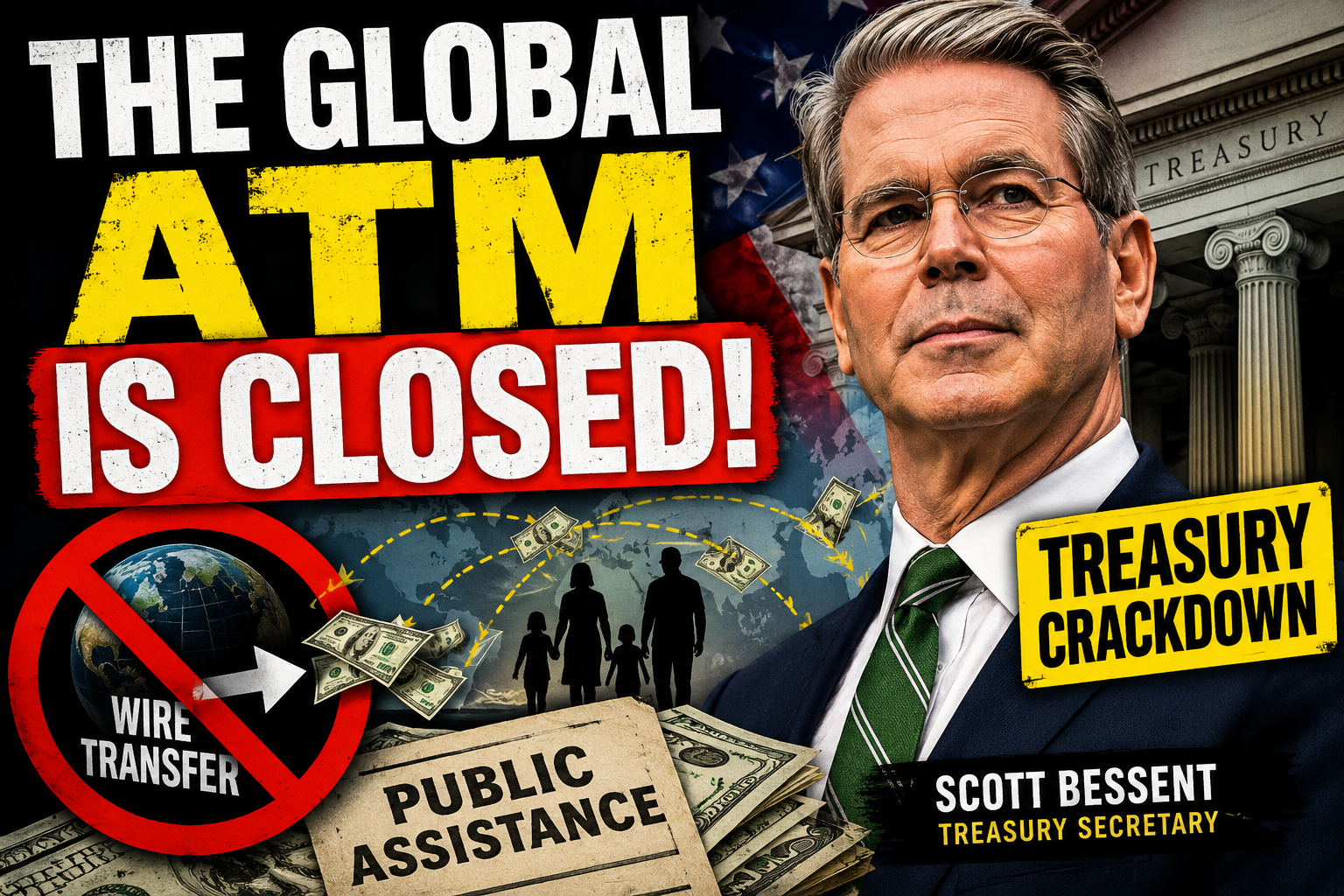
In January 2026, Treasury Secretary Scott Bessent dropped a bombshell that sent shockwaves through the financial world and the halls of Congress: if you are on public assistance, you can no longer wire money out of the country. Period. No more loopholes, no more “oversights,” and no more looking the other way while American tax dollars serve as a global ATM.
For decades, we’ve watched a massive, systemic drain on our economy. Every year, billions of dollars leave the United States via remittance wire transfers. While proponents call this “global support,” the reality is much more biting. A staggering portion of that capital flows out of the very communities where residents are simultaneously receiving government benefits.
Let’s be blunt: American taxpayers have been indirectly subsidizing foreign economies. We’ve been funding a safety net intended for local survival, only to watch that capital exit our borders. Secretary Bessent didn’t just suggest a change; he drew a line in the sand.
Enforcement Is the New Standard
This isn’t just a memo that will sit on a desk in Washington. This is a full-scale crackdown. The Treasury Department has moved from passive observation to active enforcement, and they are starting where the numbers are the highest.
-
Closing the Transparency Gap: The Suspicious Activity Report (SAR) threshold for overseas wire transfers has been slashed to $3,000. If you’re moving significant cash, the government is going to know where it came from and where it’s going.
-
The Minnesota Investigation: The federal government has already launched a massive investigation into money services businesses (MSBs) in Minnesota, a known hub for high-volume remittance activity. This is a clear signal: the era of “no questions asked” is dead.
-
A “US Only” Requirement: The logic is simple. If you are receiving financial help from the American people, that money is intended to be spent in the American economy to support American families and businesses.
The Moral and Economic Cost
Critics are already lining up, calling this “financial surveillance” or “punishing the poor.” But these arguments ignore the fundamental contract of public assistance.
Government aid is a safety net, not a wealth redistribution scheme for the rest of the world. It is funded by the labor of American workers to ensure that no one in our society goes hungry or homeless. When that money is immediately wired to a foreign bank account, it creates a “leak” in our economic bucket. Every dollar sent abroad is a dollar that isn’t paying an American landlord, buying groceries from an American store, or supporting an American small business.
Furthermore, it raises a question of necessity. If a household has enough surplus cash to send thousands of dollars overseas, it suggests that the “need” for public assistance may be overstated. We cannot have a system where the middle class struggles to pay for gas while their tax dollars are being exported to foreign nations.
Protecting the Integrity of the Safety Net
American taxpayers are among the most generous people on earth. They signed up to help their neighbors get back on their feet. They did not sign up to provide a revolving door for international currency transfers.
The least we can expect from those receiving a helping hand is that they keep those funds within the borders of the country providing the help. It’s about accountability, it’s about common sense, and most importantly, it’s about respecting the citizens who fund these programs in the first place.
Secretary Bessent has finally prioritized the American taxpayer over global financial flows. The system has run unchecked for years, but the party is officially over.
Is this a necessary protection of American resources, or is the government overstepping its bounds? The debate is just beginning. Drop your thoughts in the comments below.