
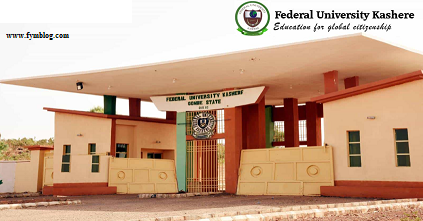
FUKASHERE Breaks New Ground-In a significant academic development that signals new opportunities for aspiring health professionals, the Federal University of Kashere in Gombe State has been granted the go-ahead to launch a fresh set of specialized health-related degree programmes.
This milestone follows a comprehensive evaluation by the National Universities Commission (NUC), the body responsible for regulating and approving university-level programmes across the country. With this approval, the institution is now set to expand its academic catalogue and strengthen its influence within the health sciences landscape in the northern region and beyond.
The decision by the Commission marks a turning point for the university. For years, the institution has expressed interest in diversifying its academic strengths to cater to the growing demand for qualified health practitioners in Nigeria.
The healthcare sector continues to evolve at a fast pace, with communities increasingly in need of professionals who are well-trained, disciplined, and equipped with modern scientific knowledge. This approval is therefore not just an institutional achievement; it is a strategic contribution to national development.
How the Approval Was Achieved
Before any Nigerian university can introduce a new degree programme, the NUC must conduct a rigorous assessment to ensure the institution is capable of upholding quality. This process involves physical verification, documentation review, interviews with academic staff, and inspection of infrastructure such as laboratories, classrooms, clinical equipment, and learning resources. Only universities that meet the required academic benchmarks are allowed to proceed.
In the case of the Federal University of Kashere, the Commission dispatched a panel of experts to conduct what is known as a resource verification exercise. Their responsibility was to audit the university’s readiness in terms of teaching personnel, space allocation, equipment availability, and the general preparedness of the academic departments proposing the new programmes.
During this initial stage, the review team examined the competence and qualifications of lecturers expected to handle the courses. They also evaluated the university’s clinical partners and practical training facilities to ensure students would have access to real-world medical environments for hands-on experience.
The inspectors further inspected libraries, e-learning systems, digital laboratories, administrative structures and student support services.
At the conclusion of this verification, the university successfully met the baseline requirements stipulated by the NUC. This accomplishment enabled the Commission to formally approve the launch of the new health-focused undergraduate programmes starting from the 2025/2026 academic session.
The Newly Approved Programmes
The approval letter issued by the Commission on 8 December 2025 confirmed that the following three programmes have been cleared for immediate commencement as full-time degrees:
1. Bachelor of Dental Surgery (B.D.S.)
This programme prepares students for careers in clinical dentistry, oral health management, and dental surgery. With oral health challenges on the rise in Nigeria, the introduction of a dental training programme in the region is expected to address shortages of skilled dental professionals. Students trained in this programme will gain competence in preventive dentistry, restorative procedures, oral pathology, and surgical interventions.
2. Bachelor of Nursing Science (B.N.Sc.)
Nursing remains one of the most sought-after professions in the health sector, especially considering the global migration of Nigerian nurses. The approval of the Nursing Science degree will enable the university to contribute significantly to the training of compassionate, disciplined, and clinically competent nurses who can function effectively in hospitals, community health centres, research institutes, and global healthcare systems.
3. Bachelor of Occupational Therapy (B.O.T.)
Occupational Therapy is an emerging but increasingly important field that focuses on improving patients’ functional abilities after illness, injury, or disability. The launch of this programme sets the Federal University of Kashere among the few institutions in Nigeria offering specialized training in rehabilitative sciences. Graduates of this programme will be equipped to work in rehabilitation centres, special education facilities, hospitals, and private therapeutic practices.
The Commission emphasized clearly that these programmes are approved strictly for full-time study. Any variation, especially the introduction of part-time, distance learning, or hybrid formats, will require a separate and fresh application. The NUC also cautioned that the university must maintain the exact programme names as approved. Renaming or rebranding any of the programmes without official consent would constitute a breach of academic regulations.
Why This Approval Matters
The NUC’s approval carries several far-reaching implications for students, the university community, and the region as a whole. Some of the most notable include:
1. Strengthening the University’s Academic Reputation
Adding these specialized programmes boosts the university’s academic profile and positions it as a competitive institution within the field of health sciences. In a country where students often apply to distant schools due to limited programme options, this expansion helps retain talent within the region.
2. Addressing Workforce Gaps
Nigeria continues to face shortages in several healthcare specialties. Dental professionals are scarce, nurses are constantly migrating, and occupational therapy remains underrepresented. By offering training in these fields, the university helps to bridge existing healthcare workforce gaps.
3. Enhancing Student Opportunities
Prospective students in Gombe State and neighbouring areas will now have access to programmes that were previously unavailable within the zone. Instead of relocating to far-off states for admission, students can now enroll in high-quality medical-related programmes closer to home.
4. Boosting Regional Healthcare Outcomes
Training more specialists ultimately contributes to improving community health outcomes. Over time, the presence of more dentists, nurses, and occupational therapists will enhance access to care, reduce patient waiting times, strengthen preventive health awareness, and improve rehabilitation services.
5. Encouraging Institutional Growth
The approval serves as a motivator for the university to keep expanding its academic and physical infrastructure. The Commission made it clear that continuous improvement is not optional. Teaching quality, laboratory upgrades, staff development, research capacity, and clinical partnerships must remain ongoing priorities. The university is expected to invest further in facilities, digital tools, laboratories, and faculty recruitment to sustain the long-term success of the programmes.
A New Phase for Federal University of Kashere
This development represents more than an administrative victory; it underscores the university’s strategic commitment to diversifying its academic landscape and embracing the demands of modern healthcare education. As the 2025/2026 academic session approaches, the institution is expected to begin mobilizing resources for student admission, clinical partnerships, laboratory upgrades, and recruitment of additional academic and technical staff.
Prospective students and parents should also be prepared for competitive entry processes. Health science programmes are highly demanding, and admission typically requires strong academic performance, particularly in Biology, Chemistry, and other science-related subjects. Students must also demonstrate discipline, resilience, and a genuine passion for healthcare service.
Federal University of Kashere’s expansion aligns with broader national conversations about strengthening Nigeria’s human resources for health. With population growth, evolving disease patterns, and increasing expectations for quality healthcare, institutional interventions like this are essential.
As the university moves into this new chapter, it enters a realm that carries both prestige and responsibility. Successfully running health programmes demands dedication, strategic planning, continuous investment, and adherence to global academic standards. If the institution maintains these commitments, it will not only elevate its status but also make meaningful contributions to healthcare delivery in Nigeria.
Recommended Posts:
- MMU Opens Admissions for the 2025/2026 Diploma in Medical Science Programme
- FCE Abeokuta Post UTME Form for 2025/2026 Degree Admission
- UNIPORT Releases New Sandwich Admission Form For 2024/2025/2026 Sessions
- FUOYE Ikole Campus Announces Date for 2025 Matriculation Ceremony